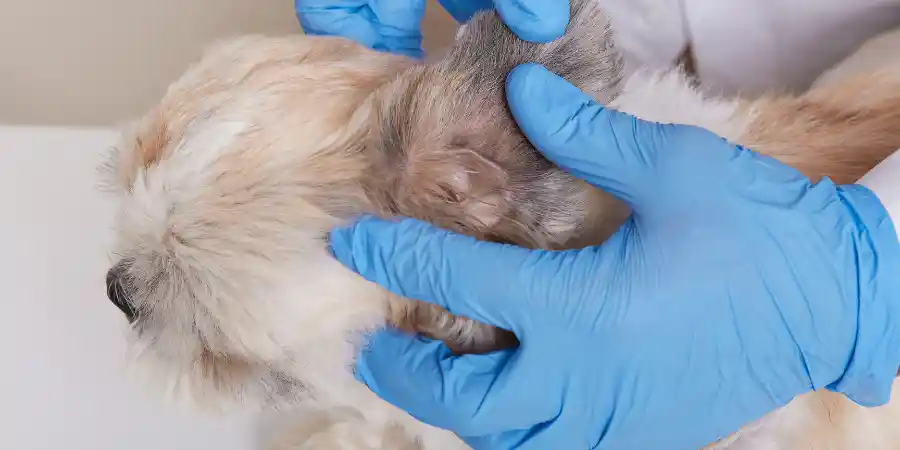
Hives are the areas of the skin that appear reddened and raised. Hives can be very itchy for your dog, just as they can be for humans.
Key Takeaways
- Hives are raised, red bumps that are itchy and uncomfortable. They are often caused by an allergic reaction.
- Hives are usually harmless but should still be seen by a vet. In serious cases, allergic reactions may worsen and cause a medical emergency called anaphylaxis.
- Treatment involves reducing the allergic reaction.
Hives in Dogs: What They mean & What Causes Them
In my experience with dogs, most cases of hives start with an immune system overreaction that releases histamine after exposure to something triggered by insect bites, certain food, medication, or environmental allergens like pollen. When this happens, raised, red, intensely itchy skin welts suddenly appear, often spreading across the head, neck, or body within minutes.
Veterinarians often call this condition urticaria, and in many cases the bumps are harmless and temporary, usually lasting only a few hours before fading. Still, I always tell owners that these spots can signal severe allergic reactions, sometimes requiring urgent veterinary attention if swelling, breathing trouble, or other serious reactions develop.
What are hives in dogs?
From what I’ve seen while observing dog skin issues, hives often appear quickly on a dog’s body after exposure or contact with an allergen, showing up as a raised, red area called a wheal or multiple wheals across the head, neck, back, stomach, legs, face, or even the throat. In mild cases, this allergic reaction across the body may disappear within minutes or hours, but sometimes it can progress to anaphylaxis, causing dangerous swelling in the airways that needs quick treatment.
What do hives look like on a dog?
When I check a dog with hives, I often notice individual welts on the skin that vary in size, from about 5 millimeters or 1/4 inch to several centimeters in diameter, and a large number of welts in a concentrated area may blend together into a large patch. This skin condition can appear quickly after exposure to an allergen, forming a red, raised area that feels very itchy, causing extreme discomfort, but it may also disappear within minutes or hours.
What causes hives in dogs?
Environmental, chemical, food (dietary), or other allergens can cause hives if your dog has a reaction. Common causes of hives in dogs include:
- Shampoos or topical agents
- Vaccinations
- Toxic plants
- Chemicals
- Medications
- Food ingredients
- Insect bites or stings (often on a dog’s head or neck)
Symptoms of Hives on Dogs
If your dog has hives, you may notice:
- Red, raised areas of the skin
- Intense itching
- Excessive drooling if the mouth is swollen
- Swelling (which is especially concerning if it involves the face and/or respiratory system)
What to Do If You Spot Hives on Your Dog
In mild cases, I often see hives disappear within 12-48 hours after a dog has contact with an allergen, sometimes even without medication or treatment. Still, there is a risk that reactions may worsen into serious allergic reactions like anaphylaxis, causing dangerous swelling in the dogs airways, so if signs appear on the face or throat, I always advise quick help from a veterinarian or an animal hospital for emergency care to prevent obstruction of the airway or potential obstruction.
How Hives are Diagnosed in Dogs
When a vet examines a dog, they try to identify where hives appear on the pup’s body, and I’ve often noticed that sharing possible allergens the dog was exposed to or had contact with, plus where the owner first spotted them, really helps. Using these factors, the vet may create a personalized treatment plan and monitor the dog’s response to the treatment.
How to Treat Dog Hives
As a pet owner, dealing with dog hives can feel stressful, so proper treatment often starts with dietary changes or food trials to identify ingredients that trigger reaction in a dog. Once the cause becomes clearer, vets usually suggest dietary recommendations to prevent the problem from returning.
For many cases, doctors may use oral antihistamines, injectable antihistamines, steroids, or other injectable medications, and in severe instances they might add intravenous fluids. These medications should always be used under vet supervision, and I always remind owners to consult vet before administering medication, especially human medication that may be safe for humans but toxic to dogs and lead to serious health issues.
In some specific circumstances, vets also suggest at-home treatment options to keep pets comfortable, such as using a cold compress on swollen areas to ease itching linked to skin conditions. Small steps like this can support recovery while professional care continues.
Recovery and Management of Dog Hives
A good vet will first determine the cause of hives by reviewing the dog’s health history and any exposure history to possible allergens, while also noting the frequency of flare-ups. In my experience, this careful review helps decide whether
Allergy testing is needed to confirm environmental allergens affecting the dog.
In some cases, vets suggest immunotherapy treatment such as allergy shots to desensitize the dog to specific allergens.
They may also run a food trial to spot problem ingredients causing a reaction, which later helps create better dietary recommendations.
At mydogwell.com, we keep things simple. No complicated terms, no confusing information—just practical advice to help you understand your dog better and keep them healthy.
FAQ’s
How to get rid of hives on dogs?
Injectable antihistamines and corticosteroids usually bring about a dramatic improvement, sometimes in as little as a few minutes.
What is the most common cause of hives in dogs?
From what I’ve seen while caring for dogs, most hives start after a reaction to different allergens, such as environmental allergens, chemical allergens, food allergens, or dietary allergens. Many common causes include insect bites, stings, or certain food ingredients, and the swelling often shows first around a dog’s head or neck.
Does Benadryl get rid of hives in dogs?
In practice, vets sometimes use Benadryl, commonly prescribed for dogs dealing with itchy skin from allergies, especially when hives appear on the body. However, while it may help with allergy responses, it is not always strong at reducing itchiness, though antihistamines like diphenhydramine are also used in cases such as mast cell tumors.
How long do hives last in dogs at home?
In mild cases, the hives will generally disappear 12–48 hours after contact with the allergen.
What human medicine is safe for dog hives?
In many cases, vets rely on antihistamines like diphenhydramine, Benadryl for dogs, cetirizine, Zyrtec, or hydroxyzine, which are also used by humans to manage allergy symptoms. These medicines help treat allergies in dogs by blocking histamine from binding to cells, which reduces its harmful effects.