As a pet parent, I find it important to create a habit of checking a dog’s comfort daily the way we check poop or Dog stool to tell health changes in colour, consistency, and frequency those dog’s poop clues often give the first signs of illness, a lot in fact.
When I see concerning changes and notice a dog’s poop with the presence of blood, or a dog pooping blood, it’s helpful to know to seek treatment and exactly what to do and when, because the first thing your veterinarian will ask are questions aimed at figuring out what might have caused the decline.
And I use those same habits logs, exams, and home checks to judge heart failure comfort and guide kinder choices.
Blood in Stool: What it Means for Your Dog

Blood in your dog’s stool indicates bleeding somewhere in their digestive tract. Causes range from minor dietary indiscretions or straining to life-threatening conditions like viral infections, toxins, or internal blockages. The color and volume of the blood are your biggest clues.
When I check a dog’s stool in practice, even a small amount of blood can point to gastrointestinal irritation, inflammation, or an injury, sometimes caused by minor dietary indiscretions I see owners overlook.
In tougher cases, this links to parasites or infections, and ignoring them can allow serious conditions to grow quietly.
I always tell pet parents to notice colour first: bright red blood usually means hematochezia from lower tract bleeding, while dark/tarry blood signals melena tied to upper tract issues.
In emergencies like hemorrhagic gastroenteritis or HGE, that colour change is often the first warning I’ve learned never to dismiss.
Dog pooping blood can be a warning sign of digestive issues, infections, or something more serious that needs attention.
If you notice your dog pooping blood, it’s best to act quickly and consult a vet to find the cause and protect your pet’s health.
Blood in dog stool:
Blood in stool can be a sign of parasites, infection, or irritation in the digestive tract.
If you notice blood in dog stool more than once, it’s best to have your vet check the cause early.
Why Is My Dog Pooping Blood?
Seeing blood in your dog’s poop is alarming, and it can be caused by several factors.
Eating Something Bad or a Switching to a New Food
In my experience treating dogs, bloody poop is often the first sign affecting the pup’s digestive tract, and the consequence can occur anywhere from the stomach to the small intestine, colon, or anal region.
I usually find blood shows up when common conditions quietly start forming inside the digestive tract.
Many cases I see involve inflammation, which we medically call gastroenteritis, and when bleeding is present, it may progress into acute hemorrhagic diarrhea syndrome or AHDS. These problems develop fast within the GI tract, so timing always matters in real-life practice.
A frequent trigger is dietary indiscretion, meaning the dog has eaten something they shouldn’t have, a situation I’ve handled countless times in the clinic.
This habit stresses the gut lining, increases irritation, and turns a mild upset into visible warning signs.This can include non-food items, such as:
In daily practice, I’ve seen bloody poop in dogs often occur after dietary changes, especially when new food, a treat, or a chew toy is introduced too quickly.
Problems also show up when a dog has eaten another pet’s food or follows a raw diet or uncooked diet without guidance.
To prevent dietary indiscretion, I advise putting your dog in a dog crate or behind a dog gate in a dog-proofed room when left unsupervised.
These simple steps reduce risk and reflect what has worked best for me with real households and busy owners.
Infections, Parasites, or Cancer That Affects the GI Tract
Other conditions that can affect the digestive tract, leading to bloody poop in dogs, include:
- Infections (bacteria or viruses such as salmonella or parvovirus)
- Parasites (intestinal worms, coccidia, giardia), which can be transmissible to people
- Cancer
- Pancreatitis (inflammation of the pancreas)
Diseases or Issues That Affect Blood Clotting
Bloody poop in dogs can also be seen with conditions “outside” the digestive tract. This may include issues that affect normal blood clotting, such as:
- Kidney disease
- Liver disease
- Toxins like rodenticide poisoning
- Bleeding disorders
- Diseases of the immune system, such as immune-mediated thrombocytopenia (ITP)
- Hormonal disorders
- Cancer
Other diseases or conditions that cause bloody poop in dogs include:
- Stress
- Trauma
- Intussusception (folding of the intestines)
- Anal gland problems
- Food allergies/intolerance
- Gastrointestinal (GI) ulceration
- Irritable bowel disease (IBD)
- Addison’s disease
What if Your Dog Is Pooping Blood and Vomiting?
If your dog is passing blood in his stool and vomiting, go to your vet imidiately.
From my experience, when vomiting occurs alongside loss of blood or fluid in the stool, it can quickly lead to life-threatening dehydration. This is a serious sign that there may be a more serious underlying disease, and noticing loss of fluid early is key to protecting your dog’s health.
What Does Blood in a Dog’s Poop Look Like?
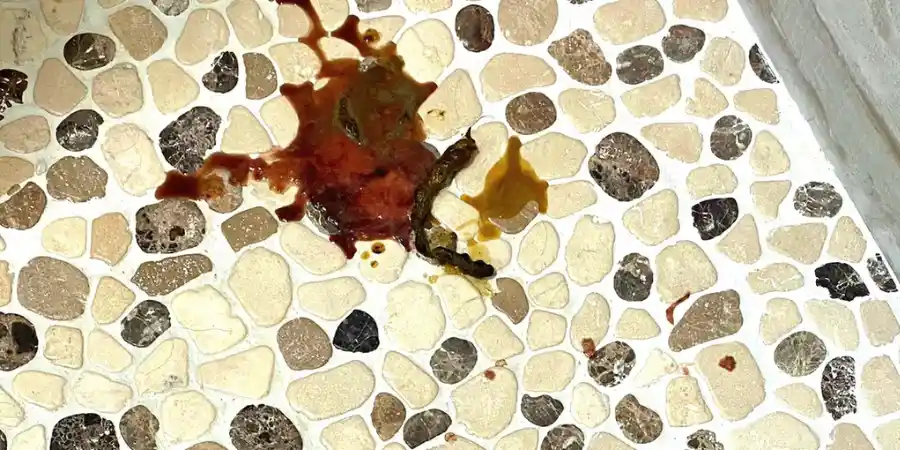
When I examine a bloody stool, I focus on its color and appearance because they determine which part of the digestive tract the blood is coming from. In my experience, bloody stool can show up in several different ways, each signaling a specific issue to watch closely.
Hematochezia: Bright Red Blood in a Dog’s Poop
In my experience, hematochezia shows up as bright red blood in a dog’s poop, usually coming from the lower part of the digestive tract, including the colon, anus, or rectum. This blood looks fresh because it has not completed the full digestive process and often exits the body quickly.
I’ve noticed that hematochezia frequently accompanies diarrhea, giving the stool a red-tinged appearance. Dogs may show increased frequency and pass a larger volume of stool, which helps me identify the issue early before it worsens.
The consistency of affected stool can vary from soft or formed texture to completely liquid, depending on the severity. Sometimes, formed stool is covered in mucus, which is another sign that the blood may be on the outside of the poop rather than mixed in.
Observing these signs carefully allows me to track problems in the lower part of the digestive tract and act quickly to address the underlying cause, ensuring that hematochezia is managed properly for the dog’s health.
Melena in Dogs: Black and Tarry Poop
In my experience, melena happens when blood originates in the upper part of the digestive tract, such as the stomach or small intestine, making the stool dark, black, or tarry. Many pet parents don’t recognize the presence of blood in dark stools, so it’s important to check your dog’s poop carefully.
I’ve seen melena occur with any condition that affects the intestine or stomach, including inflammation, ulcers, or even cancer. Early attention can prevent worsening and helps identify serious problems quickly.
Typically, dog poop with melena appears more solid, which can confuse owners who expect diarrhea with bleeding. Understanding the stool appearance helps distinguish between upper and lower tract bleeding.
By teaching pet parents to spot dark stool or tarry textures, I’ve helped dogs get treated sooner and avoided complications from unnoticed blood in the upper part of the digestive tract.
Dog Is Pooping Pure Blood

It’s also important to note that in some cases, you may see your dog pass only blood with no poop. If the stool is liquid, or the gut is empty, blood may be all that comes out.
What To Do if Your Dog Is Pooping Blood
If your dog is pooping blood, the best thing to do is to call a veterinarian for advice. In some cases, a conversation over the phone can help determine whether your dog needs to be examined right away.
At-Home Care
In some instances, at-home care can be appropriate if the dog’s stool shows a false appearance of blood from colored foods like beets or red-dyed treats. Eating these items can make owners think there is a problem when the dog is otherwise healthy.
It helps to review what the dog has been exposed to or given in the previous days. Consulting a vet can determine the next best steps and help ensure that the dog’s stool issues are correctly understood without unnecessary worry.
When To Go to the Vet
If your dog starts pooping blood and displays any of these symptoms, take him to the vet immediately:
- Vomiting
- Pushing to have a bowel movement and little to nothing comes out (tenesmus)
- Refusing food or water
- Your pup becomes unresponsive
- Pale gums (white or pale pink instead of a normal salmon pink color)
- Lethargy or weakness
These symptoms could signify shock and a more serious disease.
Diagnosing Blood in a Dog’s Stool
When I bring a pup in for a physical examination, the vet will perform a thorough check, including a rectal exam, to look for tumors, foreign objects, or anal gland issues.
The vet will also check the dog’s lymph nodes and perform abdominal palpation to detect pain, swelling, or abnormal organs, ensuring nothing serious is missed.
Your vet may recomended some more diagnostics:
- Stool exam, which will look for abnormal bacteria and parasites. It can also verify blood is being passed in the stool.
- Giardia and parvo SNAP tests
- CPL or pancreatitis testing
- Routine blood work evaluating the extent of blood loss, hydration status, and organ failure
- X-rays and/or abdominal ultrasound, useful for detecting tumors and foreign objects
- Fecal culture
- Resting cortisol or endocrine tests looking for conditions like Addison’s disease and malabsorptive diseases
- Endoscopy or colonoscopy to visualize and biopsy the GI tract
Treating Bloody Poop in Dogs
Because there are several reasons why a dog might poop blood, the treatment will depend on the underlying cause.
Treating Digestive Tract Upset
When a dog shows digestive tract upset from dietary changes or inflammation, a veterinarian may prescribe an easily digestible diet or bland diet along with medications to support the dog’s gut. I’ve seen this combination help calm a dog’s digestive upset quickly and safely.
The treatment may include probiotics, prebiotics, or antibiotics, depending on the cause. Sometimes, the vet also uses Famotidine, an antacid, or Omeprazole to treat ulcers and provide additional support to the dog’s gut.
Treating Dehydration
If a dog appears dehydrated, the vet may recommend giving fluids to restore hydration. In mild dehydration, the vet often administers fluids under the skin and allows the dog to go home for further care.
For severe cases, intravenous (IV fluid therapy) may be required, sometimes combined with hospitalization, monitoring, and intensive support. I’ve seen timely intervention with fluids make a huge difference in a dog’s recovery and comfort.
Bloody Dog Poop Recovery and Management
The recovery of dogs with blood present in their dog’s stool can be variable depending on the underlying cause. With appropriate treatment and after each defecation, the stool often looks more normal, showing improvement within 24 to 48 hours in many cases.
Some dogs may need to be hospitalized for several days, and certain conditions require lifelong medication, constant follow-up, and careful monitoring to check medication response.
Others might need surgery or chemotherapy, and in rare cases, humane euthanasia is recommended based on prognosis or lack of response to treatment.
Be sure to adhere to your veterinarian’s recommendations and follow-up schedule.
Can My Dog Die From Pooping Blood?
If your dog has a loss of blood from the digestive tract that is significant or combined with loss of fluid from vomiting or diarrhea, it can become life-threatening.
Severe dehydration and anemia can lead to serious consequences, including shock, difficulty breathing, internal organ damage, or even death if untreated.
Always check with a veterinarian to assess the status of your pet and determine the urgency of care. Early recognition and intervention can save lives when blood loss is this critical.
Conclusion:
Dog poop blood can be a sign of stomach upset, infection, or something more serious that needs quick attention.
If you notice dog poop blood more than once, don’t wait get your dog checked by a vet to find the cause early.
Blood in your dog’s poop should never be ignored, as it can signal anything from mild digestive upset to a serious gastrointestinal or organ problem.
The color, amount, and your dog’s behavior help determine whether it’s minor irritation or a life-threatening emergency.
Acting quickly calling your veterinarian, watching for vomiting or lethargy, and starting treatment early can prevent dehydration, shock, and severe complications.
A simple daily habit of checking your dog’s stool can help you catch problems early and protect their comfort and long-term health.
Why is my dog pooping blood is a common concern, as blood in dogs poo, blood in dog poo, or blood in dog poop can signal infections, diet issues, or something more serious.
If you notice blood in dog poop, don’t ignore it early checks can help find the cause and keep your dog safe.
Use our tools :
- https://mydogwell.com/pet-age-calculator/
- https://mydogwell.com/get-your-dog-care-plan/
- https://mydogwell.com/pet-water-intake-calculator/
- https://mydogwell.com/emergency-drug-calculator-for-dogs-cats/
At mydogwell.com, we keep things simple. No complicated terms, no confusing information—just practical advice to help you understand your dog better and keep them healthy.
FAQ’s
When to be concerned about blood in dog stool?
If you worry about blood in a dog’s stool, especially with weakness, vomiting, pale gums, lack of appetite, or pain, and notice large amounts or frequent bloody diarrhea like a raspberry jam stool, you should call your vet for immediate veterinary care.
Even small amounts in puppies or senior dogs can signal serious issues such as infections, parasites, or internal bleeding, while occasional streaks with normal behavior may allow a regular vet visit.
What does it mean if a dog has blood in their stools?
I’ve noticed that fresh, bright red blood in a dog usually comes from the lower intestine or colon, while dark, tarry stool indicates bleeding higher in the digestive tract.
Common triggers include stress, sudden diet changes, parasites, bacterial infections, toxin exposure, or inflammatory conditions, and these signs typically help pinpoint the source of the problem.
Can a dog recover from blood in stool?
The recovery of a dog’s stool can be variable depending on the underlying cause, but with appropriate treatment and each subsequent defecation, the stool should look more normal with less amounts of blood present.
If it doesn’t improve, you should contact your vet right away to address the issue and ensure more effective care.
Will blood in stool go away on its own?
A small amount of one-off bleeding can often go away on its own without needing treatment.
Can dogs poop blood if they are stressed?
I’ve seen that sudden changes in a dog’s routine, loud noises, or other anxiety-inducing events can lead to stress-induced colitis, which is inflammation of the colon.
This colitis often results in bloody diarrhea, especially when the stress is prolonged, and recognizing these triggers early helps prevent complications.
⚠️ MEDICAL DISCLAIMER: This article is for
informational purposes only. MyDogWell.com is not
operated by licensed veterinarians. Always consult
with a licensed veterinarian before making any
health decisions for your dog.
[Read Full Medical Disclaimer]:https://mydogwell.com/medical-disclaimer/