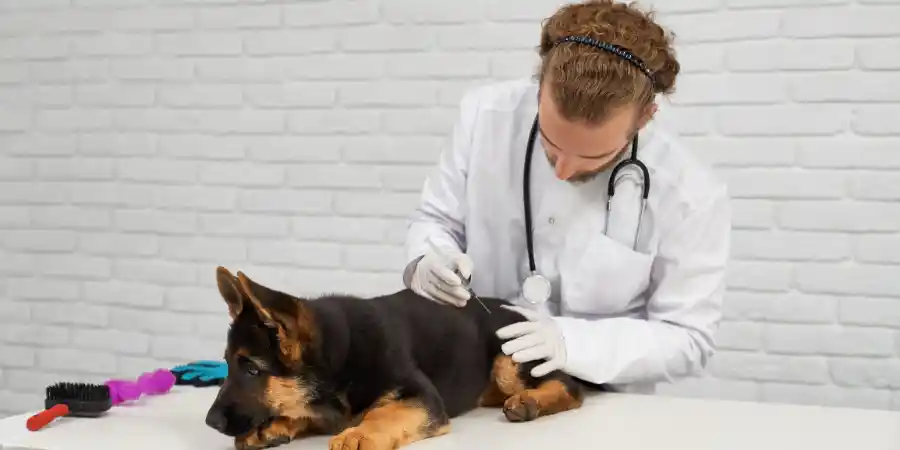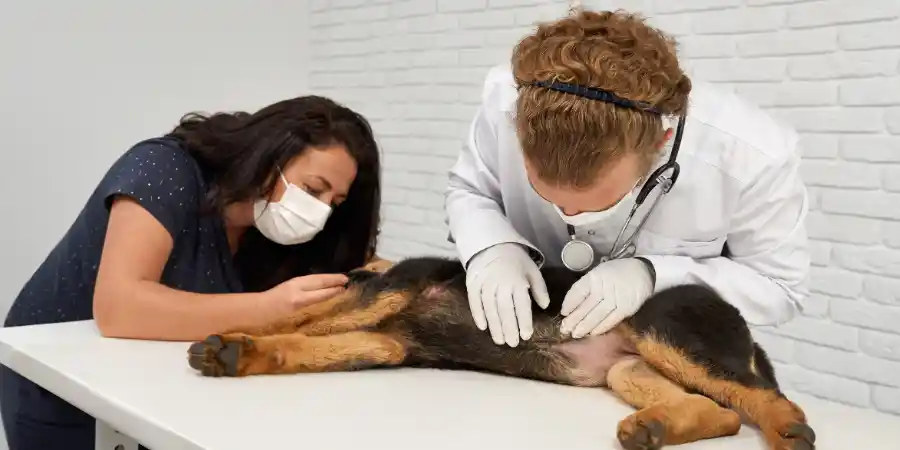
Mild swelling after a dog’s vaccination is common and usually harmless. It is part of the body’s immune response. However, not all swelling is equal some cases signal allergic reactions or complications that require prompt attention. Knowing the difference reduces risk and improves recovery.
Dog Swelling After Vaccination
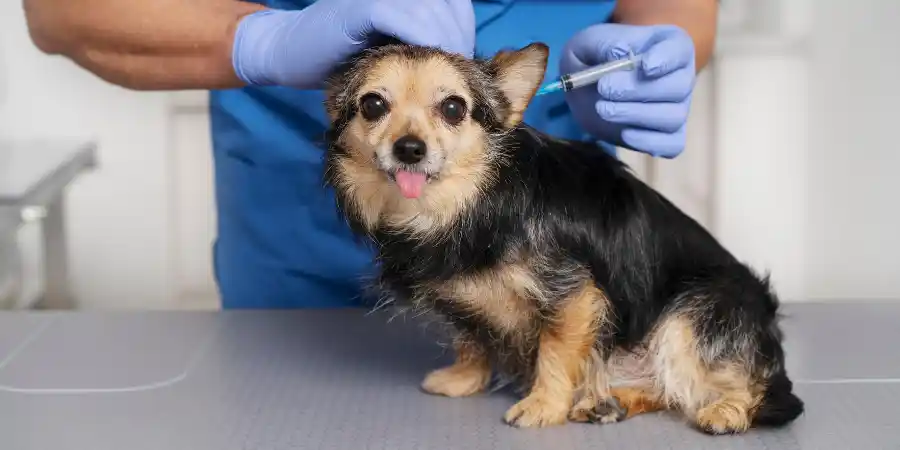
Dog swelling after vaccination is common, often appearing as a small, firm, non-painful lump at the injection site that resolves within 1–3 weeks. It is usually a localized immune response (granuloma) or mild inflammation. While mild tenderness is normal, immediate vet care is needed if swelling is accompanied by facial swelling, hives, or breathing issues (anaphylaxis).
Swelling and inflammation:
Mild swelling or inflammation at the injection site can occur after vaccination and is usually temporary, but persistent, painful, or rapidly increasing swelling should be checked by a veterinarian.
What Is Post Vaccination Swelling?
Post-vaccination swelling is a localized or systemic inflammatory response that occurs after a vaccine is administered. It typically appears at or near the injection site.
A small, firm lump appears on your dog’s neck a few hours after a rabies shot. It feels warm but does not cause pain. This is a normal immune response.
Why Does Swelling Happen?
Vaccines stimulate the immune system to recognize harmful pathogens. This process involves:
- Increased blood flow
- Activation of immune cells
- Release of inflammatory mediators
These processes can cause visible swelling.
Scientific basis:
According to the American Veterinary Medical Association (AVMA, 2023), mild inflammation is expected after vaccination because antigen-presenting cells activate local immune pathways.
Common Causes of Swelling
1. Normal Immune Response
This is the most frequent cause.
What happens:
- Immune cells gather at the injection site
- Tissue temporarily inflames
- Small lump (1–3 cm)
- Appears within 24 hours
- Resolves in 2–7 days
Example:
A Labrador develops a pea-sized lump after a DHPP vaccine. It disappears within 5 days.
2. Injection Site Reaction
Some dogs react to the physical act of injection.
Why it occurs:
- Needle trauma
- Sensitivity to vaccine components
Signs:
- Slight swelling
- Mild tenderness
Insight:
Short-haired breeds sometimes show visible swelling more clearly due to less fur coverage.
3. Allergic Reaction (Hypersensitivity)
Less common but more serious.
What triggers it:
- Proteins in vaccines
- Preservatives like thimerosal
Signs to watch:
- Rapid swelling (within minutes to hours)
- Facial swelling (especially around eyes and muzzle)
- Hives
- Vomiting or diarrhea
Data point:
A 2005 study published in the Journal of the American Veterinary Medical Association (JAVMA) found acute allergic reactions occurred in approximately 0.38% of vaccinated dogs.
4. Vaccine Adjuvants
Adjuvants are added to enhance immune response.
Impact:
- Can cause localized inflammation
- More common in killed vaccines (e.g., rabies)
Insight:
Adjuvant-related swelling tends to last slightly longer but remains benign in most cases.
5. Infection at Injection Site
Rare but important.
Cause:
- Bacterial contamination
- Poor hygiene during injection
Signs:
- Swelling grows larger over time
- Warm, painful area
- Possible discharge
Timeline clue:
If swelling worsens after 3–5 days instead of improving, suspect infection.
6. Injection Site Tumors
This is extremely uncommon in dogs.
Note:
More frequently documented in cats (feline injection-site sarcoma).
When to worry:
- Lump persists beyond 4 weeks
- Continues growing
- Firm and immovable
Manage swelling and pain:
Mild swelling or tenderness at the injection site can often be managed with rest and gentle care, but worsening or severe swelling should be checked by a veterinarian.
Timeline: What Is Normal vs. Concerning?
| Time After Vaccination | What’s Expected | What’s Not |
|---|---|---|
| 0–24 hours | Mild swelling, slight warmth | Severe swelling, breathing issues |
| 1–3 days | Lump stable or shrinking | Increasing size |
| 4–7 days | Gradual resolution | Persistent pain or redness |
| 2–4 weeks | Lump gone | Lump still present or growing |
Symptoms Checklist
Normal signs:
- Small lump
- Mild tenderness
- Slight lethargy
Warning signs:
- Facial swelling
- Difficulty breathing
- Collapse
- Persistent vomiting
Quick question:
Is your dog acting normal apart from the swelling?
- Yes → likely mild reaction
- No → consult a vet immediately
What Should You Do?
Immediate Care at Home
Step 1: Observe
First of all you need to Check size, location, and behavior.
Step 2: Cold Compress
Secondly apply for 5–10 minutes, or 2–3 times daily.
Step 3: Limit Activity
Most important thing is avoid rough play that may irritate the area.
When to Contact a Veterinarian
Contact a vet if:
- Swelling lasts more than 7 days
- Lump grows larger
- Dog shows discomfort or pain
- Any allergic symptoms appear
Emergency trigger:
Facial swelling + breathing difficulty = immediate veterinary visit.
Veterinary Treatment Options
1. Antihistamines
That is used for mild allergic reactions.
Example:
Diphenhydramine (dose determined by vet)
2. Corticosteroids
This Reduce inflammation in severe reactions.
3. Antibiotics
Prescribed if infection is suspected.
4. Drainage or Biopsy
Required if swelling persists or changes in structure.
Preventing Future Reactions
1. Inform Your Vet
If your dog had a previous reaction, always mention it.
2. Adjust Vaccine Schedule
Some dogs benefit from:
- Spaced vaccinations
- Fewer combination vaccines
3. Pre-Treatment
In sensitive dogs:
- Antihistamines may be given before vaccination
4. Monitor Closely After Shots
Stay at the clinic for 15–30 minutes post-vaccination when possible.
Breeds More Prone to Reactions
Certain breeds show slightly higher sensitivity:
- Dachshunds
- Pugs
- Boston Terriers
- Miniature Pinschers
Research note:
A 2005 JAVMA analysis reported small-breed dogs had higher rates of vaccine reactions compared to large breeds.
Real Case Example
A 3-year-old Beagle received a rabies vaccine. Within 6 hours, a 2 cm lump developed at the injection site. The dog remained active and ate normally. The swelling reduced by day 3 and disappeared by day 6. No treatment was required.
Takeaway:
Most cases resolve without intervention.
Key Data and Research
- 0.38% reaction rate in dogs (JAVMA, 2005)
- Most reactions occur within 24 hours
- Small breeds show higher sensitivity
- Rabies and combination vaccines have slightly higher reaction rates
Practical Care Routine
Day 1:
Observe swelling and behavior
Day 2–3:
Apply cold compress if needed
Day 4–5:
Check if lump is shrinking
Day 7:
If still present, consult a vet
Why Some Dogs React More
Emerging research suggests:
- Genetic predisposition influences immune sensitivity
- Gut health may impact immune response
- Repeated exposure to certain vaccine components increases sensitivity
A 2021 review in Veterinary Immunology and Immunopathology highlighted that immune variability between dogs is significant and not fully understood.
Mistakes to Avoid
- Ignoring rapid swelling
- Over-massaging the injection site
- Giving over-the-counter drugs without guidance
- Skipping follow-up checks
Conclusion:
Swelling after vaccination in dogs is usually a normal immune response. Most cases resolve within a week without treatment. However, rapid swelling, persistent lumps, or systemic symptoms require veterinary attention. Early observation and proper care make a significant difference.
At mydogwell.com, we focus on practical, evidence-based pet care. Vaccinations are essential, and understanding their side effects helps you respond calmly and correctly. When in doubt, observation and timely veterinary advice are your best tools.
Use our tools :
- https://mydogwell.com/pet-age-calculator/
- https://mydogwell.com/get-your-dog-care-plan/
- https://mydogwell.com/pet-water-intake-calculator/
- https://mydogwell.com/emergency-drug-calculator-for-dogs-cats/
FAQ’s
Is swelling after vaccination always bad?
No, mild swelling after a vaccination is a normal sign that your immune system is responding and building protection.
How big is too big?
Anything larger than a golf ball or rapidly increasing in size needs evaluation.
Can I give human medication?
No. Always consult a veterinarian before giving any medication.
Should I skip future vaccines?
Not without veterinary advice. Vaccines protect against life-threatening diseases.
⚠️ MEDICAL DISCLAIMER: This article is for
informational purposes only. MyDogWell.com is not
operated by licensed veterinarians. Always consult
with a licensed veterinarian before making any
health decisions for your dog.
[Read Full Medical Disclaimer]:https://mydogwell.com/medical-disclaimer/