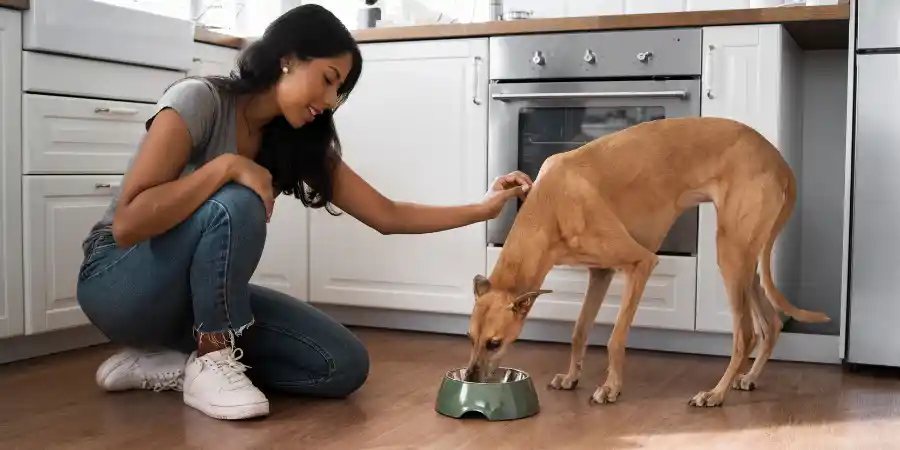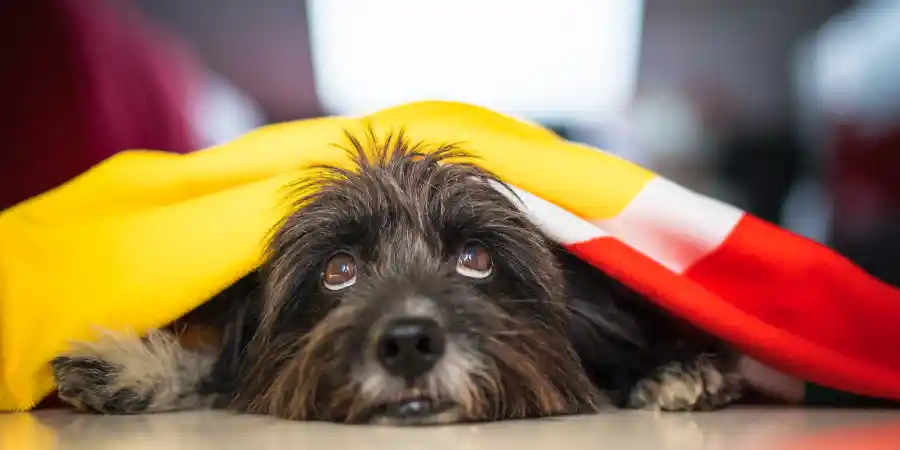
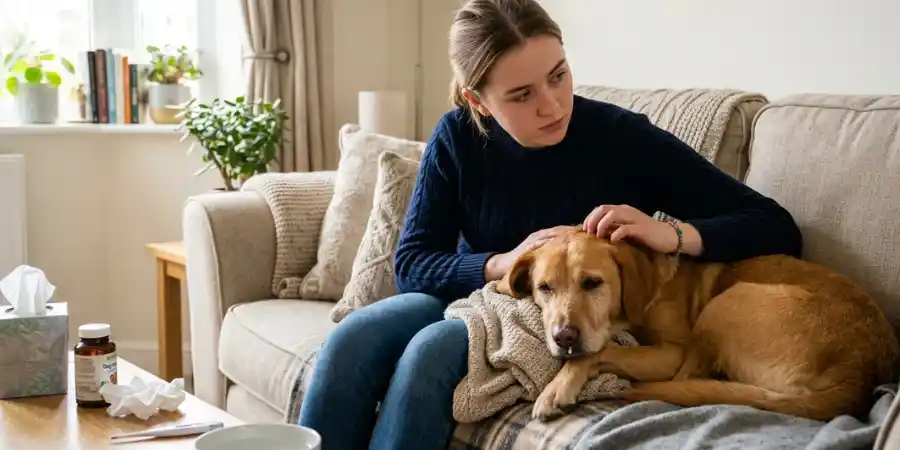
Your dog is sneezing, their nose is running, and they have barely moved from their bed all morning. You know something is off but you do not know if this is a cold, something more serious, or something that will pass on its own. Dog colds are common, largely manageable, and often resolve without a vet visit but several conditions that look exactly like a cold are not colds at all. This guide tells you exactly what to look for, how to read the signs correctly, and when to stop waiting and call your vet.
How to Tell If Your Dog Has a Cold ?
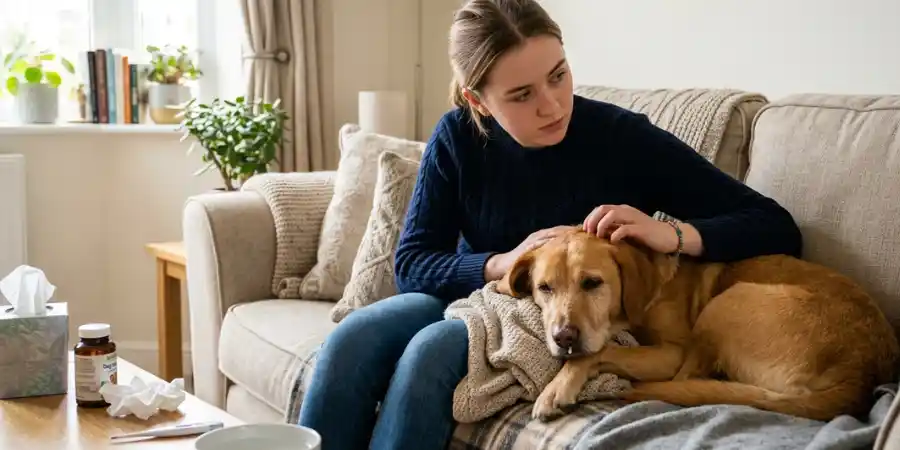
Dogs do not catch the human common cold, but they can contract upper respiratory infections with similar symptoms, such as kennel cough or canine flu. Common signs include frequent sneezing, a runny nose, coughing, and low energy. Help your dog recover by providing a warm, quiet rest space, encouraging hydration, and using a humidifier.
Dog cold symptoms typically include sneezing, coughing, runny nose, nasal congestion, watery eyes, and lethargy, often lasting 5–10 days. While usually mild, these symptoms can indicate viral infections like canine adenovirus, parainfluenza, or kennel cough. Monitor for reduced appetite and keep your dog warm and rested.
Can Dogs Actually Get Colds?
Yes , dogs get respiratory infections that produce symptoms almost identical to human colds, but they are caused by different viruses that do not spread between dogs and humans.
What most owners call a “dog cold” is medically part of a group called canine infectious respiratory disease complex CIRD.
This complex includes several viruses and bacteria that cause upper respiratory symptoms in dogs: canine respiratory coronavirus, canine adenovirus type 2, canine parainfluenza virus, and Bordetella bronchiseptica better known as the bacterium behind kennel cough.
None of these pathogens cause illness in humans. Your dog’s cold does not put you at risk, and your cold cannot give your dog a respiratory infection.
The viruses are species-specific they are adapted to their host and do not jump. This does not mean a dog cold is always minor. Some CIRD infections progress to bacterial pneumonia, especially in puppies, senior dogs, and immune-compromised dogs.
10 Signs Your Dog Has a Cold
Not every sign appears in every dog. The more of these you observe together, the more certain you can be that a respiratory infection is the cause.
| Sign | What It Looks Like | What It Tells You |
|---|---|---|
| Sneezing | Repeated sneezing, often in clusters | Upper respiratory inflammation |
| Runny nose | Discharge from one or both nostrils | Viral or bacterial infection see colour guide below |
| Watery eyes | Excess tearing, wet fur below the eye | Conjunctivitis accompanying infection |
| Eye discharge | Crust or mucus at the inner corner of the eye | Secondary infection beginning |
| Coughing | Mild to moderate cough wet or dry | Lower respiratory involvement |
| Lethargy | Less movement, more sleep, not interested in play | Body directing energy to immune response |
| Loss of appetite | Eating less or skipping meals | Congestion reduces smell read more in our dog not eating guide |
| Noisy breathing | Congested, snuffling breathing especially at rest | Nasal passage inflammation |
| Mild fever | Ears feel warm, temperature above 103°F | Active immune response check with our dog fever guide |
| Behavioural change | Quieter than normal, seeking warmth, less social | Pain, discomfort, or general malaise |
A dog showing 3 or more of these signs together, with no other explanation, almost certainly has a respiratory infection.
Read our full dog illness guide to cross-reference any additional symptoms you are seeing.
The Discharge Colour Guide
Every competitor says “runny nose” and stops there. The colour, consistency, and quantity of nasal discharge tells you far more than the presence of discharge alone.
| Discharge Colour | What It Signals | Action |
|---|---|---|
| Clear and watery | Early viral infection, allergy, or mild irritation | Monitor most common in the first 1–2 days of a cold |
| Clear and thick | Cold progressing immune response building | Monitor normal in days 2–4 |
| White and cloudy | Moderate infection early signs of immune response | Monitor call vet if no improvement after 5 days |
| Yellow | Bacterial involvement secondary infection developing | Call your vet for an appointment today |
| Green | Active bacterial infection established secondary infection | Call your vet today antibiotics likely needed |
| Bloody or pink-tinged | Nasal vessel rupture, foreign body, or serious infection | Call your vet today |
| Brown or foul-smelling | Nasal infection with tissue involvement or foreign body | Call your vet today |
The most important transition to watch for is clear discharge becoming yellow or green. That colour change, especially if it happens after the dog seemed to be improving, signals that a bacterial secondary infection has taken hold on top of the original viral infection.
Viral infections do not respond to antibiotics. Bacterial secondary infections do which is why the timing of that colour change matters for treatment.
One Nostril or Both? The Sign Everyone Misses
This is the most overlooked physical observation in dog cold assessment and it is one of the most important.
A cold, kennel cough, flu, or allergy produces discharge from both nostrils simultaneously. The infection is systemic it affects the entire upper respiratory tract, not a single isolated passage.
Discharge from only one nostril tells a completely different story. A dog with discharge from only the left nostril or only the right nostril is not presenting with a cold. They have something in or affecting only one nasal passage a foreign body such as a grass seed or small stone, a nasal polyp, a fungal infection affecting one side, or in older dogs, a nasal tumour.
One-nostril discharge with no other cold symptoms is a vet visit this week, not a cold to manage at home. One-nostril discharge with nosebleeds, facial swelling on that side, or pawing at one side of the face is a vet visit today. Do not treat one-nostril discharge as a cold it almost never is.
Dog Cold vs Kennel Cough vs Flu vs Allergy , How to Tell Them Apart
These four conditions share almost identical surface symptoms. The differences are subtle but important.
| Dog Cold (CIRD) | Kennel Cough | Canine Flu | Allergy | |
|---|---|---|---|---|
| Key sound | Wet sneezing, mild cough | Dry, honking goose cough | Persistent wet cough | Sneezing without cough |
| Fever | Mild (up to 103°F) | Usually absent or very mild | Often present up to 104°F | None |
| Discharge | Clear progressing | Clear thin | Yellow or green common | Clear seasonal |
| Onset | Gradual over 1–2 days | Often rapid after kennel exposure | Rapid sometimes within hours | Gradual follows environment |
| Duration | 5–10 days, then resolves | Up to 2 weeks | 2–3 weeks | Ongoing does not resolve |
| Recent exposure | Other sick dogs | Kennel, dog park, groomer | Highly contagious environments | Seasonal/environmental change |
| Gets better then worse | No steady improvement | No steady then resolves | May worsen mid-course | No stays consistent |
Cold vs allergy:
A cold follows a clear arc gets worse for a few days, peaks, then steadily improves. An allergy stays at a consistent level, does not improve over 10 days, and returns every time the dog is in the same environment or season. If your dog sneezes heavily every spring or every time you visit a specific park that is an allergy, not a cold.
Cold vs kennel cough:
The honking goose cough of kennel cough is genuinely distinctive once you have heard it. A dog with kennel cough coughs forcefully and repeatedly, sometimes until they retch, and the sound is dry and harsh. A dog with a cold coughs less intensely and more wetly. Recent kennel exposure in the past 3–10 days is a strong predictor of kennel cough specifically.
How a Dog Cold Progresses Day by Day
This is what owners actually need a timeline that tells them what is normal at each stage and when non-improvement becomes a signal to act.
| Day | What to Expect | Action |
|---|---|---|
| Day 1–2 | Sneezing begins, clear discharge, mild lethargy, possible appetite reduction | Monitor this is the early viral stage |
| Day 3–4 | Symptoms at their worst discharge may thicken, cough may develop, energy lowest | Monitor peak immune response, this is expected |
| Day 5–6 | Symptoms should begin improving discharge clearing, energy returning slightly | If still worsening at day 5, call your vet |
| Day 7–8 | Noticeable improvement in most dogs | If no improvement by day 7, vet appointment needed |
| Day 9–10 | Most dogs fully recovered | Any symptoms persisting past day 10 need veterinary assessment |
| Day 3–5 (concern flag) | Discharge turning yellow or green after initially being clear | Call your vet secondary bacterial infection developing |
The danger window is days 3–5. A dog that seemed to be improving and then worsens particularly with a colour change in discharge, a new fever, or rapidly increasing lethargy is not continuing a normal cold progression.
They have developed a secondary infection. That specific pattern of improvement-then-worsening is the earliest actionable signal that a simple cold has become something that needs treatment.
High Risk Dogs Different Rules Apply
Three groups of dogs need shorter monitoring windows and lower thresholds for calling the vet. Managing them the same as a healthy adult dog is a mistake.
Puppies under 6 months:
Puppies have immature immune systems and deteriorate faster than adult dogs. A puppy with cold symptoms that is not eating or drinking within 12 hours of onset needs a same-day vet call.
Parvovirus and distemper both begin with cold-like symptoms and both are potentially fatal in unvaccinated puppies. Never assume a puppy’s respiratory symptoms are “just a cold” without veterinary confirmation.
Check your puppy’s vaccination status and track their health using our dog care plan page.
Senior dogs over 9 years:
Senior dogs have reduced respiratory reserve their lungs and airways have less capacity to compensate when inflamed. A cold that a 3-year-old dog clears in 7 days can become pneumonia in a 12-year-old dog in the same timeframe.
Senior dogs with cold symptoms that include any coughing should be seen by a vet within 48 hours of onset rather than monitored for a full week.
Use our dog age calculator to confirm your dog’s life stage and adjust your monitoring timelines accordingly.
Immune-compromised dogs:
Dogs on long-term corticosteroids, chemotherapy, or other immune-suppressing medications, and dogs with Addison’s disease or diabetes, cannot mount a normal immune response. What resolves in 7 days in a healthy dog may not resolve at all without veterinary intervention in an immune-compromised dog.
Call your vet at the first sign of respiratory symptoms in this group.
Can You Catch Your Dog’s Cold?
No. The viruses that cause respiratory infections in dogs cannot cause illness in humans, and human cold viruses cannot infect dogs.
This is one of the most searched questions about dog colds and the answer is definitively no in both directions for standard cold viruses.
The pathogens in the CIRD complex canine parainfluenza, canine adenovirus type 2, Bordetella, and canine respiratory coronavirus are all adapted to canine biology. They replicate efficiently in a dog’s cells and cannot replicate efficiently in human cells. The same is true in reverse.
The one nuance worth knowing: Bordetella bronchiseptica the bacteria behind kennel cough can theoretically infect humans with severely compromised immune systems. This is extremely rare and is not a realistic concern for healthy adults.
If you are undergoing chemotherapy, have HIV, or have another condition that severely suppresses immunity and your dog has confirmed kennel cough mention it to your doctor. For all other purposes, you cannot catch what your dog has and your dog cannot catch what you have.
Safe Home Care Steps
These steps are safe to use from the first day of symptoms. They reduce discomfort, support recovery, and help you monitor the progression accurately.
1. Provide rest and a warm, quiet space. Move your dog’s bed away from draughts, cold floors, and other pets. Rest is the most important component of recovery from any viral infection the immune system works most efficiently when the body is not also managing exercise and temperature regulation.
2. Ensure hydration. A congested dog loses appetite for both food and water because reduced smell makes both less appealing. Place the water bowl near the dog’s resting spot. Offer fresh, slightly warmed water the gentle warmth enhances the aroma and encourages drinking.
Check your dog’s daily water needs using our dog water intake calculator.
3. Use steam therapy. Run a hot shower in your bathroom until the room fills with steam. Bring your dog in and sit with them for 10–15 minutes. The steam loosens congestion in the nasal passages and upper airways within minutes faster and more intense than a standard humidifier.
Do this once or twice a day during peak congestion. Ensure the dog is not touching the hot water directly.
4. Warm their food. A congested dog has reduced ability to smell food and loses interest in eating. Warming wet food or adding warm water to dry kibble releases the aroma, making the food detectable through congestion. Small, warm, aromatic meals maintain calorie intake during illness.
Read our guide on why your dog is eating treats but not food for the full explanation of how smell drives appetite.
5. Clean the nose and eyes gently. Use a soft, damp cloth warmed in clean water. Wipe gently from the inner corner of each eye outward. Clean dried discharge from around the nostrils carefully.
Do not insert the cloth into the nostril. Use a fresh cloth for each eye to avoid cross-contaminating eye discharge. Keeping these areas clean prevents secondary skin infections and reduces discomfort.
6. Isolate from other dogs. CIRD pathogens spread through direct contact, shared bowls, shared toys, and airborne particles from sneezing. If you have other dogs in the household, separate the sick dog from day one of symptoms. Keep them in a different room with their own water bowl and bedding.
Do not take the sick dog to dog parks, groomers, kennels, or any social setting until 48 hours after all symptoms have fully resolved.
7. Monitor the discharge colour every day. Check the discharge once in the morning and once in the evening. Keep a simple note colour, quantity, which nostril or both. This daily record is the most valuable data point for tracking whether the cold is progressing normally or developing into a secondary bacterial infection.
The colour change from clear to yellow or green is your earliest actionable warning that treatment is needed.
Signs a Cold Has Become Something Worse
A dog cold that progresses normally improves steadily after day 4. These are the signs that the illness has moved beyond a simple viral cold into bacterial pneumonia or a more serious condition.
Fever that develops mid-illness rather than at the start. A mild fever in the first two days of a cold is a normal immune response. A fever that appears on day 4 or 5 when the dog initially had none or a fever that was mild and has now spiked above 104°F signals a secondary bacterial infection establishing itself.
Discharge that changes from clear to yellow or green. This colour change is the most reliable visible indicator that bacteria have colonised the already-inflamed respiratory tract.
Breathing that becomes laboured or audible at rest. A dog with a cold may breathe slightly noisily from congestion. A dog developing pneumonia breathes with effort you see the chest and belly working with each breath, the breathing rate rises above 40 breaths per minute at rest, and the dog adopts a posture to maximise airflow.
This is an emergency.
Symptoms that worsen after initially improving. The improvement-then-worsening pattern is the most important pattern to recognise. A dog that seemed better on day 4 and is worse on day 5 has not simply had a bad day their illness has progressed. Call your vet the same day you notice this reversal.
Coughing that produces blood or pink-tinged mucus. Any blood in cough or discharge is a same-day vet visit regardless of what else is or is not present.
If your dog shows any of these signs, read our guide on dog panting at night laboured breathing often first becomes obvious when the dog lies down to sleep, and that guide covers the full picture of nighttime respiratory changes.
When to Call Your Vet
| Situation | Action |
|---|---|
| Discharge from one nostril only | Vet appointment this week |
| Discharge turning yellow or green | Vet appointment today |
| Bloody or brown discharge at any point | Vet appointment today |
| Fever above 104°F | Vet appointment today |
| Laboured breathing belly heaving | Emergency vet immediately |
| Cold symptoms in a puppy not eating for 12 hours | Vet appointment today |
| Cold symptoms in a senior dog with coughing | Vet appointment within 48 hours |
| Symptoms worsening after initial improvement | Vet appointment today |
| No improvement at all after 7 days | Vet appointment this week |
| Any cold symptoms in an immune-compromised dog | Call vet at first sign same day |
For dogs with known heart or respiratory conditions, do not wait at all cold symptoms in these dogs can rapidly escalate. Read our guide on signs of heart failure in dogs to understand how respiratory symptoms interact with cardiac conditions.
Use our tools :
- https://mydogwell.com/pet-age-calculator/
- https://mydogwell.com/get-your-dog-care-plan/
- https://mydogwell.com/pet-water-intake-calculator/
- https://mydogwell.com/emergency-drug-calculator-for-dogs-cats/
At mydogwell.com, we keep things simple. No complicated terms, no confusing information just practical advice to help you understand your dog better and keep them healthy.
FAQs
How can I tell if my dog has a cold or something more serious?
The most reliable indicators that this is more than a cold: discharge from only one nostril, discharge turning yellow or green, fever above 104°F, laboured breathing at rest, symptoms that worsen after initially improving, or any bloody discharge at any point.
A straightforward dog cold produces clear-to-white discharge from both nostrils, mild lethargy, and follows a clear improvement arc after day 4. Any deviation from that pattern warrants a vet call.
How long does a dog cold last?
Most dog colds caused by standard CIRD pathogens resolve within 5 to 10 days in healthy adult dogs. Symptoms are typically worst on days 3 and 4, then steadily improve. Kennel cough can persist for up to 2 weeks. Canine influenza typically lasts 2 to 3 weeks. If symptoms persist beyond 10 days without improvement, book a vet appointment something other than a simple cold is likely responsible.
Should I keep my dog inside when they have a cold?
Yes, for two reasons. First, rest speeds recovery a dog that exercises while fighting a respiratory infection puts extra strain on an already inflamed airway. Second, cold pathogens are contagious to other dogs through airborne particles, direct contact, and shared water. Keep your dog home and avoid any contact with other dogs until 48 hours after all symptoms have fully resolved.
Can I give my dog anything from home to help them recover?
Steam therapy, warm water, slightly warmed food, and gentle nose and eye cleaning are all safe and effective home measures described in this guide. Never give human cold or flu medications, antihistamines, or decongestants to a dog without explicit vet instruction. Many human cold remedies contain xylitol, ibuprofen, or pseudoephedrine all of which are toxic to dogs in small doses. For safe comfort measures, use only the home care steps in this guide.
Can my dog give me their cold?
No. The viruses that cause respiratory infections in dogs canine parainfluenza, canine adenovirus, Bordetella, and canine respiratory coronavirus are not transmissible to humans under normal circumstances. You can handle, comfort, and care for your sick dog without risk of catching their illness.
The only narrow exception involves Bordetella in people with severely compromised immune systems if this applies to you, consult your doctor.
How do I know if my dog’s sneezing is a cold or an allergy?
Track the pattern over 10 days. A cold follows a clear arc: it gets worse for the first 3–4 days, peaks, then steadily improves and resolves. An allergy does not follow this arc it stays at a consistent level, does not improve over 10 days, and returns every time the dog is in the same environment, season, or location.
Allergy sneezing is also typically not accompanied by a fever, and the discharge stays consistently clear and watery rather than thickening as it would in an infection.
MEDICAL DISCLAIMER: This article is for
informational purposes only. MyDogWell.com is not
operated by licensed veterinarians. Always consult
with a licensed veterinarian before making any
health decisions for your dog.
[Read Full Medical Disclaimer]: https://mydogwell.com/medical-disclaimer/