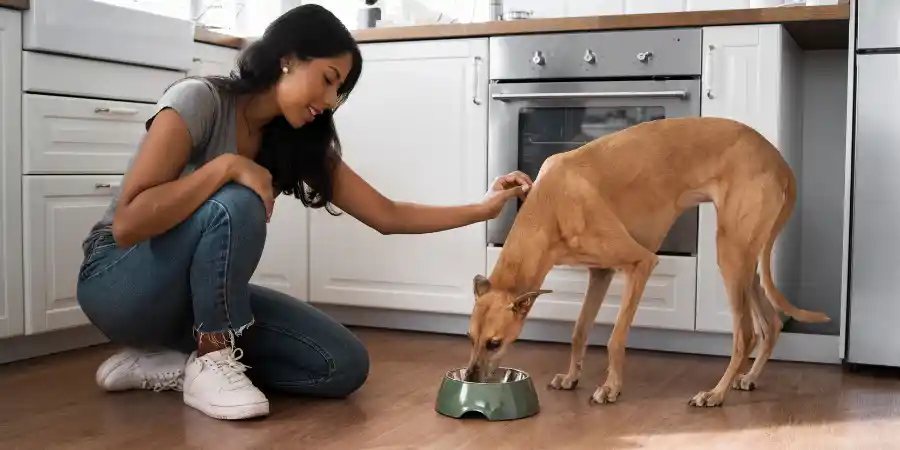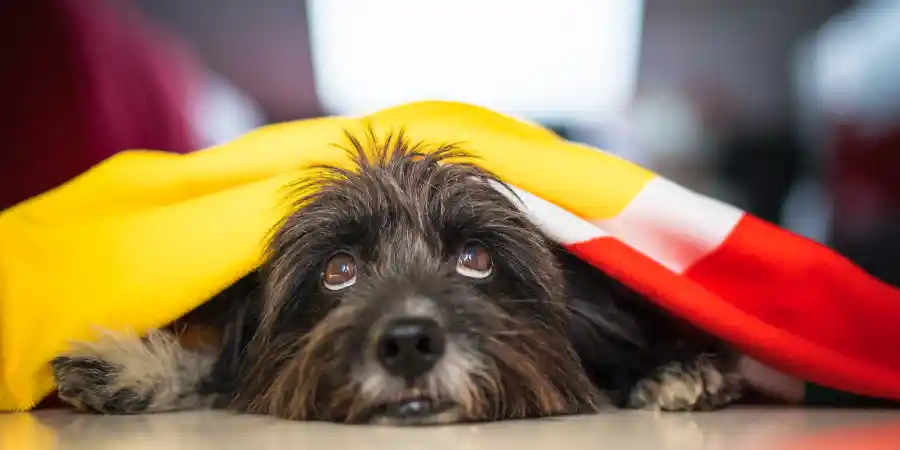
Your dog should be sleeping. Instead they are panting sometimes heavily and you cannot find a reason. No exercise, no heat, nothing obvious. Nighttime panting is one of the most common reasons dog owners lose sleep alongside their pets. It has many distinct causes ranging from a warm bedroom to heart disease. Most owners look at their dog and guess. This guide gives you a system to find the actual cause and tells you clearly when to stop guessing and call your vet.
Why is My Dog Panting at Night?
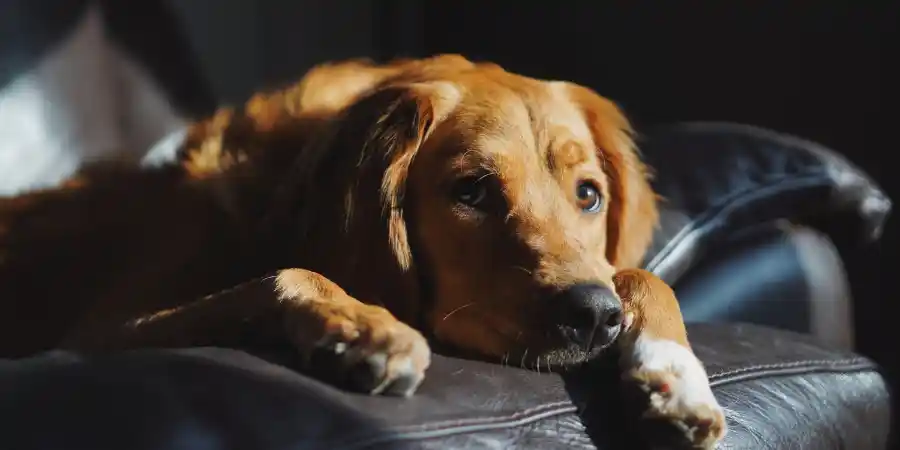
A dog panting heavily at night in a cool, quiet room usually signals a physical or emotional trigger. Common causes include overheating, anxiety, joint pain, or medical conditions like heart disease or Cushing’s disease. If it continues or includes distress, contact a veterinarian.
Dog panting at night is often caused by stress, anxiety, pain, or overheating, but it can also indicate underlying medical issues like Cushing’s disease, heart disease, or respiratory problems. If the panting is accompanied by restlessness, pacing, or occurs in a cool, comfortable environment, it is considered abnormal and warrants a veterinary consultation.
Normal or Abnormal Dog Panting at Night?
Not all night time panting means something is wrong. To know when to act, you first need a baseline.
A healthy resting dog takes between 15 and 35 breaths per minute. Count the number of times your dog’s chest rises in 30 seconds, then double it. That is their resting breathing rate.
| Breathing Rate | What It Means |
|---|---|
| Under 15 breaths per minute | Below normal , call your vet if persistent |
| 15–35 breaths per minute | Normal resting range |
| 36–40 breaths per minute | Slightly elevated , monitor and recheck in 10 minutes |
| Above 40 breaths per minute at rest | Abnormal , call your vet |
| Panting with mouth open, tongue out, no exertion | Investigate the cause immediately |
Normal nighttime panting has a clear explanation your dog played hard an hour ago, the room is warm, or they had an exciting evening. Abnormal nighttime panting has no explanation, appears frequently across multiple nights, or comes paired with other signs like restlessness, pacing, or a reluctance to lie down.
Why Does It Happen at Night Specifically?
This is the question every guide misses and it is the most important one to understand.
During the day, your dog has constant stimulation: sounds, smells, movement, interaction. This stimulation actively suppresses the brain’s awareness of discomfort, anxiety, and physiological stress.
When the house goes quiet and your dog lies still, all of that suppression disappears. Pain that was manageable during a busy day becomes the loudest signal in a quiet body. Anxiety that was manageable during social interaction becomes overwhelming in a dark, still room.
This is why dogs with arthritis, chronic pain, heart disease, Cushing’s, and anxiety all tend to show their worst symptoms at night. The problem often exists during the day too nighttime just removes the noise that was masking it.
If your dog pants every night but seems fine every day, that pattern is a significant diagnostic clue , the condition is chronic, not acute.
Causes of Dog Panting at Night
1. Pain
Pain is the single most common cause of nighttime panting in dogs and the one most frequently missed because dogs are expert at hiding discomfort during waking hours.
Arthritis pain intensifies when a dog lies still on a hard or cold surface. Dogs with joint disease shift positions repeatedly trying to find comfort, pant from the effort and discomfort, and may grunt or whimper when they finally settle.
Run your hands along your dog’s joints hips, elbows, knees and watch their face. A dog that flinches, tenses, or pulls away is telling you something.
Dogs panting from pain also tend to be reluctant to lie down, circle repeatedly before settling, or wake suddenly from sleep. Read our full guide on at-home pain management for dogs for safe options while you wait for your vet appointment.
2. Anxiety and Stress
Anxiety-driven panting at night is common and comes in several forms. Separation anxiety flares when owners go to bed in a different room. Noise phobia thunderstorms, fireworks, distant traffic triggers a full fear response even when the sound is faint.
Generalised anxiety causes dogs to pace, pant, tremble, and seek contact repeatedly through the night.
Anxiety panting looks specific: the dog cannot settle, seeks constant reassurance, may paw at you or whine alongside the panting, and the behaviour stops or significantly reduces when you engage with them.
If your dog’s nighttime panting is paired with these behaviours, anxiety is the most likely driver. See our guide on dog behaviour changes for related patterns.
3. Cushing’s Disease
Every competitor mentions Cushing’s in one sentence. Here is what actually happens, because understanding it helps you recognise it.
Cushing’s disease formally hyperadrenocorticism occurs when the adrenal glands produce too much cortisol. Cortisol is the body’s stress hormone.
When it floods the system chronically, it causes the body to behave as though it is under constant stress , metabolism accelerates, the dog overheats, pants to cool down, drinks excessively, and urinates frequently.
It also redistributes body fat the classic pot-belly appearance and thins the skin and coat.
The panting from Cushing’s is persistent, appears in mild temperatures where it makes no sense, and comes paired with a cluster of other signs: increased hunger, increased thirst, a rounded belly that was not there before, and hair loss along the flanks.
Cushing’s is diagnosed primarily in dogs over 6 years old. If your dog matches this cluster of signs particularly the drinking and belly changes alongside the panting ask your vet specifically about a cortisol blood test.
4. Heart Disease
A dog whose heart is not pumping effectively cannot deliver enough oxygen through the bloodstream. The body’s response to low oxygen is to breathe faster and harder which presents as panting, often at night when the dog is lying down and cardiac output changes with posture.
Nighttime is particularly hard on cardiac dogs because lying flat increases the blood volume returning to a struggling heart. Dogs with heart disease often sleep in an upright or semi-upright position to ease breathing, cough at night especially when lying down, tire faster than before on familiar walks, and lose weight without eating less.
Read our full guide on signs of heart failure in dogs for the complete picture of what to look for. If your dog is already on Vetmedin, read our guide on how long a dog can go without Vetmedin — missing doses has direct consequences for nighttime breathing.
5. Respiratory Disease
Conditions that obstruct or inflame the airways laryngeal paralysis, collapsing trachea, pneumonia, chronic bronchitis all cause laboured breathing that worsens when the dog is at rest.
Laryngeal paralysis especially affects large older dogs and produces a characteristic loud, raspy panting sound a high-pitched inspiratory noise that is distinct from normal panting.
If your dog’s nighttime panting sounds different from their daytime panting raspier, louder, or with a wheeze that sound difference is diagnostically important. Tell your vet exactly what it sounds like.
6. Heatstroke and Overheating
Heatstroke is most commonly a daytime event, but dogs can overheat at night in poorly ventilated rooms, under heavy blankets, or in hot climates where temperatures do not drop significantly after sunset.
Brachycephalic breeds Bulldogs, Pugs, French Bulldogs, Shih Tzus are at the highest risk because their anatomy limits airflow even at rest.
Overheating panting is frantic and heavy. The gums look bright red. The dog drools, seeks cool surfaces, and may seem disoriented. Room temperature matters: a dog sleeping in a room above 70°F (21°C) in summer can develop heat stress overnight.
Check the bedroom temperature first it is the easiest cause to rule out.
7. Canine Cognitive Dysfunction
Canine Cognitive Dysfunction (CCD) is dog dementia and it follows a pattern that is very specific and recognisable once you know what to look for.
Dogs with CCD experience what vets call sundowning a worsening of confusion and agitation in the late evening and through the night. The dog’s sleep-wake cycle reverses they sleep through the day and are awake, restless, and vocalising at night.
They pace the house, seem lost in familiar spaces, stare at walls, and pant from the neurological agitation the condition produces.
CCD panting does not come from pain or heat. It comes from a brain that cannot regulate sleep and wakefulness properly.
The key diagnostic clue is the pattern across weeks: it gets progressively worse, tracks with age, and is worst in the hours between midnight and 4am.
If your senior dog has started behaving differently at night over the past few months, check their age stage with our dog age calculator — CCD becomes significantly more common in dogs over 11 years.
8. Fever
A dog with a fever pants to dissipate heat exactly as they would on a hot day, but driven by internal temperature rather than external.
The difference between fever panting and heat panting is context: a feverish dog pants in a cool room at rest, has warm ears, may shiver, and refuses food.
Use a rectal thermometer to confirm. Anything above 103°F (39.4°C) is a fever. Above 104°F (40°C) is a vet appointment today.
Read our full guide on dog fever symptoms and how to check at home for the complete temperature-by-temperature decision guide.
9. Diabetes
Diabetic dogs experience blood sugar fluctuations that trigger physiological stress responses including panting. Nocturnal hypoglycaemia (low blood sugar in the night) causes trembling, weakness, disorientation, and panting in dogs on insulin therapy.
If your dog is diabetic and panting at night, check whether the timing correlates with their insulin doses.
A dog that pants several hours after an insulin injection may be experiencing a hypoglycaemic episode contact your vet about adjusting the dose timing.
10. Bloat Gastric Dilatation Volvulus
Bloat is a life-threatening emergency where the stomach fills with gas and rotates on itself. It develops fast often within one to two hours of eating. A dog developing bloat pants, retches unproductively, paces, and has a visibly swollen, drum-tight belly.
This is one of the fastest-moving emergencies in dog medicine. Large deep-chested breeds Great Danes, German Shepherds, Dobermans, Weimaraners, Standard Poodles are at highest risk.
If your dog eats dinner and starts panting and retching an hour or two later, go to an emergency vet immediately. Do not wait to see if it passes.
11. Weakness and Systemic Illness
Panting at night can also be a sign of broader systemic illness kidney failure, liver disease, anaemia, or severe infection where the body is under physiological stress.
These causes produce panting alongside other signs of dog weakness difficulty standing, pale gums, reduced responsiveness.
If your dog’s nighttime panting is paired with weakness or lethargy that persists into the day, that combination needs same-day veterinary attention.
Panting or Rapid Breathing and Laboured Breathing
These three look similar from across the room. They are not the same thing and they do not have the same causes.
| Sign | What It Looks Like | Common Causes |
|---|---|---|
| Panting | Mouth open, tongue out, fast shallow breaths, audible | Heat, anxiety, pain, Cushing’s |
| Rapid breathing (tachypnoea) | Fast breaths, mouth may be closed, chest moves quickly | Heart disease, fever, anaemia, respiratory disease |
| Laboured breathing (dyspnoea) | Visible effort — belly heaves, nostrils flare, neck extended, elbows out | Emergency — respiratory failure, pneumonia, severe heart failure |
Laboured breathing at any time of day or night is an emergency. If your dog is breathing with their whole body belly pushing, elbows out, neck stretched forward go to an emergency vet immediately. Do not wait until morning.
Medication Triggered Panting
This is the cause most owners never consider and it is common enough to check before anything else if the panting started recently.
Corticosteroids including prednisone and prednisolone are among the most frequently prescribed drugs in veterinary medicine and they cause significant panting as a side effect. The elevated cortisol effect mimics a mild form of Cushing’s disease , the dog pants, drinks more water, urinates more, and has increased appetite.
This is expected and not dangerous, but it can be alarming if you did not know to expect it.
Other medications that cause panting include: certain heart medications, thyroid supplements at incorrect doses, and some anxiety medications during the adjustment period.
If your dog started a new medication in the last two to four weeks and the nighttime panting started around the same time call your vet and specifically mention the correlation. Do not stop the medication without guidance.
Adjusting the dose timing or switching the formulation often resolves the panting.
Female Dog Hormonal Panting
Unspayed female dogs experience significant hormonal fluctuations during their heat cycle and during false pregnancy and both cause pronounced nighttime panting that owners frequently mistake for illness.
During heat, elevated progesterone and oestrogen raise the dog’s core body temperature slightly and increase restlessness. During false pregnancy which occurs in some unspayed females eight to nine weeks after a heat cycle progesterone surges cause the dog’s body to behave as though she is about to give birth.
She becomes restless, nests, pants heavily, and may adopt toys as surrogate puppies. The nighttime panting during false pregnancy can be significant heavy, persistent, and paired with visible distress.
If your dog is unspayed, female, and started panting heavily at night within eight to ten weeks of her last heat cycle — false pregnancy is a strong candidate.
It resolves on its own within two to three weeks. If the panting is severe or she seems distressed, your vet can prescribe medication to reduce the hormonal response.
The Bedroom Environment Audit
Before any medical investigation, spend five minutes checking your dog’s sleep environment. Environmental causes are the easiest to fix and they account for a significant number of nighttime panting cases.
Room temperature. The ideal sleeping temperature for most dogs is 65–70°F (18–21°C). Feel the room at the time your dog normally starts panting. If it is above 72°F (22°C), that is a strong candidate, especially for heavy-coated or brachycephalic breeds.
Bedding. Memory foam and thick fleece beds trap heat. A dog who is warm but not hot enough to pant in the evening may cross the threshold at 2am as the bed holds their body heat. Try moving them to a cooler, firmer surface and observe for two nights.
Sleeping location. A dog sleeping near a radiator, under a south-facing window, or next to electronic equipment that generates heat will overheat. Move their sleeping spot to the coolest part of the room.
Ambient noise. Dogs hear significantly higher frequencies than humans. What sounds quiet to you a distant road, an air conditioning unit, a neighbour’s alarm may be a persistent stress trigger for your dog at night.
Water access. A dog that wakes thirsty pants from discomfort and dehydration. Ensure fresh water is always within reach of their sleeping area. Use our dog water intake calculator to check whether your dog is drinking enough across the full day.
Recent changes. New furniture, a new pet, a change in your schedule, a new food, a house move any change in the past two to four weeks is worth noting. Dogs are sensitive to routine changes and respond with physical symptoms including nighttime panting.
The 3-Night Panting Diary
A single night of observation tells you almost nothing. Three nights of structured notes tell your vet almost everything.
For three consecutive nights, record the following:
Time the panting started Is it always the same time? Midnight panting every night points to CCD’s sundowning pattern. Panting that begins one to two hours after eating points to bloat risk. Panting that starts when you go to bed points to separation anxiety.
What was happening before it started Did your dog eat a large meal? Have vigorous exercise? Get their medication? Experience a stressful event?
What the panting looked like Open-mouthed normal panting, rapid closed-mouth breathing, or laboured heaving. Record whether the tongue was extended and what colour their gums looked.
What stopped it Did it stop when you turned on a fan? When you engaged with your dog? When they moved to a cooler surface? When they finally settled? What worked tells you as much as what started it.
Your dog’s general health that day Did they eat normally? Drink normally? Move normally? Any changes? Using the DAAM check from our dog illness guide alongside this diary gives your vet a complete clinical picture at the appointment.
Bring these three nights of notes to your vet. This diary speeds up diagnosis faster than almost anything else you can bring.
Safe Home Steps While You Wait
These steps are safe to use from the moment you notice the panting. They are not a substitute for veterinary care they are what you do while you find the cause or wait for your appointment.
Step 1 — Check gum colour immediately. Lift the upper lip. Pink and moist means monitor. Pale, white, blue, or grey means emergency vet now skip every other step.
Step 2 — Take the temperature. A rectal reading above 103°F points to fever. Cool the dog with a damp cloth on paws and ear flaps. Below 103°F rules out fever as the primary driver.
Step 3 — Cool the room. Open a window, turn on a fan, move your dog to a tiled floor. If panting reduces within 10 minutes of cooling, heat was a contributing factor.
Step 4 — Offer water. Place fresh water near your dog. Do not force it. A dog that drinks immediately was dehydrated. A dog that refuses water when panting is not drinking due to heat something else is driving the panting.
Step 5 — Remove stressors. Turn off the TV, reduce lighting, move to a quiet room. Speak calmly and avoid making the situation feel urgent your anxiety escalates theirs.
Step 6 — Check for bloat. Press gently on your dog’s belly. If it sounds hollow like a drum, feels rigid, or your dog retches without bringing anything up emergency vet immediately. Bloat does not wait.
Step 7 — Record and observe. Start your panting diary tonight. If the panting is still happening after 30 minutes with no clear cause and no improvement from cooling or calming , call your vet’s emergency line.
When to Go to an Emergency Vet
| Symptom | Action |
|---|---|
| Blue, grey, or white gums | Emergency vet , go immediately |
| Laboured breathing , belly heaving, neck stretched | Emergency vet , go immediately |
| Unproductive retching with swollen belly | Emergency vet , bloat risk |
| Panting with collapse or inability to stand | Emergency vet immediately |
| Panting with suspected poisoning | Call 888-426-4435 and drive simultaneously |
| Panting with fever above 104°F | Vet today |
| Panting with rapid breathing above 40 breaths per minute | Vet today |
| Panting that has lasted more than 30 minutes with no clear cause | Call vet emergency line tonight |
| Panting that started with a new medication | Call vet next business day |
| Panting worsening over multiple nights | Vet appointment within 48 hours |
For dogs with known terminal illness where nighttime panting is part of a worsening pattern, read our guide on when is it time to put a dog down it covers the quality of life assessment your vet uses in these conversations.
Use our tools :
- https://mydogwell.com/pet-age-calculator/
- https://mydogwell.com/get-your-dog-care-plan/
- https://mydogwell.com/pet-water-intake-calculator/
- https://mydogwell.com/emergency-drug-calculator-for-dogs-cats/
At mydogwell.com, we keep things simple. No complicated terms, no confusing information just practical advice to help you understand your dog better and keep them healthy.
FAQs
Why does my dog only pant at night and not during the day?
Because daytime activity and stimulation suppress pain and anxiety signals. When the house goes quiet and your dog lies still at night, those signals become the loudest thing their nervous system registers. A dog that pants only at night and seems fine during the day almost always has a chronic condition pain, anxiety, early heart disease, or Cushing’s that daytime distraction is masking. This pattern needs a vet appointment, not observation.
Is it normal for an old dog to pant at night?
It is common but not normal meaning it happens often in senior dogs but always has a cause that needs identifying. Arthritis pain, Canine Cognitive Dysfunction, heart disease, and Cushing’s disease all become more prevalent in older dogs and all drive nighttime panting. A senior dog that starts panting at night when they did not before has developed a new condition. Use our dog age calculator to check your dog’s life stage and discuss a senior wellness screen with your vet.
My dog is panting and restless at night what does the pacing mean?
Panting paired with pacing means your dog cannot get comfortable. This combination almost always points to pain, anxiety, or Canine Cognitive Dysfunction. A dog in pain cannot find a position that relieves the discomfort. An anxious dog cannot settle. A dog with CCD does not know why they are awake or where they are and paces from the neurological confusion. All three need veterinary assessment.
Should I let my dog sleep with me if they are panting at night?
Allowing them in your room gives you the ability to monitor the panting and respond if it escalates. It may also reduce anxiety-driven panting by providing your presence. However, it does not address the cause. Let them be near you while you investigate but treat this as a monitoring decision, not a solution.
Can a dog’s diet cause nighttime panting?
Yes in two ways. A large meal close to bedtime increases metabolic heat production and can raise a dog’s core temperature enough to trigger panting in warm rooms. In large deep-chested breeds, a large evening meal also raises bloat risk. Feed your dog their largest meal at least three to four hours before sleep. Dietary allergies causing skin irritation can also disrupt sleep and drive restless panting read our guide on hives in dogs for more on how allergic reactions present physically.
How do I know if my dog is panting from pain or anxiety?
Pain panting tends to be accompanied by postural changes the dog repositions frequently, is reluctant to lie down, or flinches when touched at a specific location. Anxiety panting is accompanied by seeking behaviour the dog wants to be near you, paws at you, or cannot settle even in a familiar comfortable position. Run your hands along your dog’s body and joints. A pain response tells you it is physical. No pain response with persistent inability to settle points to anxiety or CCD. Both need veterinary assessment.
MEDICAL DISCLAIMER: This article is for
informational purposes only. MyDogWell.com is not
operated by licensed veterinarians. Always consult
with a licensed veterinarian before making any
health decisions for your dog.
[Read Full Medical Disclaimer]: https://mydogwell.com/medical-disclaimer/