Your dog is not acting right. They are lying still, their ears feel warm, and they have barely touched their food. You press your hand to their nose dry and hot. Every instinct tells you something is wrong, but you are not sure if it is serious. Dog fever is one of the most common signs of illness in dogs and most owners do not know how to check it accurately at home. This guide gives you the exact steps, the right tools, and the clear signs that tell you when to act.
Dog Fever Symptoms

The only accurate way to tell if your dog has a fever at home is to take their temperature using a pet-safe digital rectal thermometer.A dog has a fever if their temperature is over 103°F (39.4 C), with normal range being 99.5–102.5°F.Key, actionable signs include lethargy, shivering, reduced appetite, and a hot/dry nose or ears. Use a digital rectal thermometer with lubricant to confirm; if it reads 106°F (41.1C), or higher, seek immediate emergency veterinary care.
What Is a Normal Temperature for a Dog?
Dogs run hotter than humans. Before you can read a fever, you need to know what normal looks like for your specific dog.
| Temperature | What It Means |
|---|---|
| Below 99°F (37.2°C) | Too low — hypothermia risk, call your vet |
| 99.5°F – 102.5°F (37.5°C – 39.2°C) | Normal healthy range |
| 102.6°F – 103°F (39.2°C – 39.4°C) | Slightly elevated — monitor closely |
| 103°F – 104°F (39.4°C – 40°C) | Fever — call your vet today |
| Above 104°F (40°C) | High fever — vet appointment today, not tomorrow |
| Above 106°F (41.1°C) | Emergency — internal organ damage risk, go immediately |
One thing every competitor misses: every dog has their own personal normal. Some healthy dogs run at 99.5°F, others at 102.5°F. Both are normal but they are not the same dog. Take your dog’s temperature two or three times on healthy days at different times and write it down. That number becomes your personal baseline. A reading of 103°F in a dog whose normal is 99.5°F is more significant than 103°F in a dog whose normal is 102.5°F.
8 Dog Fever Symptoms
Your dog cannot tell you when they feel hot. These are the signals they send instead.
1. Lethargy and low energy. Your dog skips their usual greeting, stays on their bed, and shows no interest in play or walks. This is the most consistent early sign of fever in dogs.
2. Loss of appetite. A dog with a fever often refuses meals or eats far less than usual. If your dog skipped two meals in a row, that is worth investigating. Read our guide on why your dog is not eating for more detail.
3. Warm, dry ears. Healthy dog ears feel slightly warm. Fever ears feel noticeably hotter than the surrounding skin and often drier than usual. Use the back of your hand it is more sensitive to temperature than your fingertips.
4. Shivering or shaking. A dog with a rising fever often shivers even when the room is warm the same way humans get chills during a fever. If your dog is shaking and you cannot explain it by cold temperature or fear, check for other fever signs. See our full guide on dog shaking after vaccination if this started after a recent shot.
5. Red or glassy eyes. Inflammation caused by infection often shows in the eyes first. Fever eyes look glassy, slightly red around the whites, or watery without obvious cause.
6. Rapid or laboured breathing. A dog with a high temperature pants to release heat the same mechanism they use on a hot day. Panting at rest, indoors, with no physical exertion is a warning sign.
7. Vomiting or diarrhoea. These do not always appear with fever but when they do alongside the other signs above, the combination points to an infection or inflammatory process that needs veterinary attention.
8. Runny nose or discharge from eyes. Clear or coloured discharge paired with lethargy and appetite loss is a common picture in infections like distemper or kennel cough both of which cause significant fever.
What Causes Dog Fevers?
There can be several different causes of fever in dogs, but they generally fall into one of these categories:
- Inflammation
- Infection
- Immune-mediated
- Cancer
In some cases, despite extensive diagnostics, a cause is not found. This is called fever of unknown origin.
Anything that can stimulate the immune system can cause a fever.
For example, it’s not uncommon for pets to get a low-grade fever after being vaccinated. This is because the immune system is being stimulated to protect the body against different diseases.
Bacterial infections, fungal infections, or viral infections can all stimulate an immune response and cause a fever as well.
Cancer is another disease process that usually stimulates the immune system, resulting in a fever. Additionally, autoimmune diseases are a group of diseases that can stimulate the immune system to attack a part of the body with no underlying cause.
The 5-Point Physical Check
Before you reach for a thermometer, do this quick head-to-tail check. It takes two minutes and gives you useful information to report to your vet.
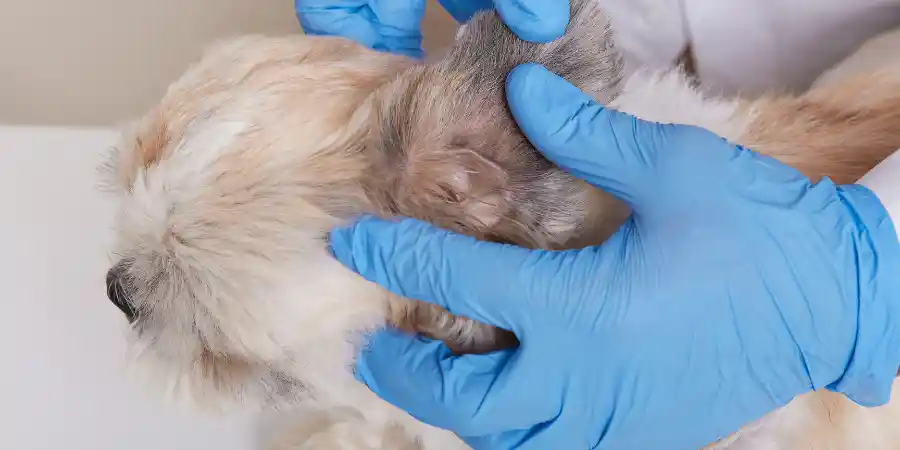
Ears. Feel the inside of both ears with the back of your hand. They should feel mildly warm. Hot, dry, or painful-to-touch ears suggest elevated temperature or an ear infection driving the fever.
Eyes. Look directly at the eyes. They should be clear and bright. Redness, discharge, cloudiness, or a glassy unfocused look are all signs of illness.
Nose. Contrary to the myth a warm, dry nose does not confirm fever. A cold, wet nose does not rule it out. The nose tells you nothing reliable about temperature. Check it only for discharge clear is acceptable, yellow or green is not.
Gums. Lift the upper lip and press one finger on the gum for two seconds. Release and count how quickly the colour returns. It should return to pink within two seconds. Slow return, pale gums, or dry sticky texture all signal a problem. Bright red gums in a hot dog point to overheating, not fever.
Belly and groin. Place your hand flat on the belly and inner thighs areas with less fur and better skin contact. These spots reflect body heat more reliably than the back or neck. If these areas feel hot to the touch and your dog flinches, combine that with the thermometer reading.
After this check, you have five data points to share with your vet and a clearer picture of whether you need the thermometer right away.
How to Take Your Dog’s Temperature at Home
This is the only method that gives you a confirmed reading. Everything else is observation this is measurement.
Before you start check your timing. This is what every other guide skips. A dog that just ran, played, or sat in the sun will have an elevated temperature that has nothing to do with illness. Wait at least 10 minutes after any activity before taking a reading. A dog that just woke up from rest gives you the most accurate baseline.
What you need: a digital thermometer, water-soluble lubricant or petroleum jelly, a treat, and ideally a second person to help.
Step 1. Apply lubricant generously to the tip of the thermometer. Use enough this makes the process faster and more comfortable for your dog.
Step 2. Have the second person hold your dog gently from the front, keeping them calm and still. Speak to your dog in a reassuring, steady voice throughout.
Step 3. Lift the tail and gently insert the thermometer approximately one inch into the rectum. Do not force it. If your dog resists strongly, stop and take them to the vet instead a stressed reading is an inaccurate reading.
Step 4. Hold the thermometer steady and wait for the beep. Most digital thermometers read in 10–60 seconds.
Step 5. Remove, read, and clean the thermometer thoroughly with soap and water or rubbing alcohol. Give your dog their treat immediately.
Keep this thermometer stored separately from any human thermometers label it clearly.
Dog Fever Treatment
Treatment of a fever in dogs is largely dependent on the cause of the fever.
Typically, several diagnostics such as blood work, X-rays, and ultrasound—are necessary to determine the cause.
In some cases, a cause can’t be identified.
In dogs who have infections, the treatment is usually a course of antibiotics such as Clavamox or doxycycline or antifungal medications like itraconazole or fluconazole.
Sometimes, if the cause of fever is not found, a course of antibiotics may be prescribed for a few days to determine if there is a response.
In other diseases, there isn’t one anecdotal treatment, and medications are given to alleviate the symptoms until the inflammation subsides.
This can take days to weeks and will depend on the level of severity.
Cancer is treated with either chemotherapy and/or radiation therapy depending on the type of cancer that is diagnosed. Some types of cancer respond well to these treatments, where others may not respond as well or at all.
Autoimmune diseases require drugs that suppress the immune system so that it stops attacking different areas of the body.
Most of these diseases are manageable but not usually curable.
Rectal vs Ear Thermometer , Which Should You Use?
| Rectal Thermometer | Ear Thermometer | |
|---|---|---|
| Accuracy | Most accurate gold standard | Slightly less accurate |
| Ease of use | Requires positioning and patience | Faster and easier |
| Best for | Any dog that tolerates it | Dogs who strongly resist rectal check |
| Common error | Inserting too shallow | Incorrect angle in ear canal |
| Vet standard? | Yes , used by all vets | No, supplementary only |
Ear thermometers designed for pets measure infrared heat from the eardrum. They are a reasonable alternative when your dog will not tolerate a rectal check but they are easier to angle incorrectly, which gives false low readings. If an ear thermometer gives you a reading in the normal range but your dog clearly looks unwell, do the rectal check or go to your vet. Never rely on a forehead or human ear thermometer for a dog.
Fever vs Overheating , Two Emergencies That Look Identical
This is one of the most important distinctions in dog health and almost no guide explains it properly.
| Fever | Overheating (Heat Stroke) | |
|---|---|---|
| Cause | Internal infection, inflammation, immune response | External hot environment, overexertion, sun exposure |
| Onset | Gradual, often over hours | Rapid, within minutes |
| Gum colour | Normal pink or pale | Bright red or dark red |
| Panting | Moderate | Excessive, frantic |
| Recent history | Recent illness, vaccine, injury | Time outdoors, car, exercise in heat |
| Treatment | Vet diagnosis and medication | Cool water immediately, then vet |
Both push temperature above 104°F and both are dangerous but they are caused by completely different things and require different responses. If your dog was just outside on a warm day and collapses, that is overheating. Cool them with room-temperature water on the paws, groin, and neck, and get to a vet. Do not use ice-cold water it causes blood vessels to contract and traps heat inside. If your dog has been indoors, has no heat exposure history, and develops a fever gradually that points to illness. Both need a vet, but the immediate first aid differs significantly.
Does My Puppy Have a Fever?
Puppies run slightly warmer than adult dogs. Their normal temperature range can sit closer to the upper end of normal — up to 102.5°F especially in their first weeks of life.
One cause of mild fever in puppies that most owners do not know about is teething. As adult teeth push through the gums between 3 and 7 months of age, mild inflammation in the mouth can cause a low-grade fever usually under 103°F alongside drooling, chewing, and reluctance to eat hard food.
A teething fever is not dangerous on its own. But a puppy with a fever above 103°F, or with any fever alongside vomiting, diarrhoea, or lethargy, needs a vet visit immediately. Puppies have weaker immune systems and deteriorate faster than adults. Do not wait and see with a sick puppy. You can track your puppy’s growth stage and vaccination schedule using the tools on our dog care plan page.
Fever of Unknown Origin in Dogs
Sometimes your vet runs every test, checks every system, and still cannot identify the cause. This is called Fever of Unknown Origin FUO.
FUO is diagnosed when fever persists beyond 3 weeks with no identified cause after standard blood work, urinalysis, and physical examination. The most common underlying causes that eventually get identified include immune system disorders, bone marrow disease, certain cancers, and deep-seated infections that do not show on standard tests.
If your dog is diagnosed with FUO, your vet may prescribe a short course of antibiotics to test for a response if the fever breaks, a hidden bacterial infection was likely the cause. If antibiotics have no effect, further specialist testing follows. FUO is not a dead end it is a starting point for deeper investigation. Keep a written symptom diary from day one and bring it to every appointment.
What to Do While You Wait for the Vet
If your dog’s temperature is between 103°F and 104°F and you have a same-day vet appointment, these steps keep them comfortable in the meantime.
Apply cool not cold water to the paws and ear flaps. Use a damp cloth or sponge. Focus on the paws, groin, and the outer ear. These areas have better blood vessel access and cool the body more effectively than the back or sides. Stop cooling when the temperature drops below 103°F over-cooling causes its own problems.
Run a fan nearby. Moving air helps dissipate heat from the skin. Position it to blow across the dog without blasting directly in their face.
Offer water in small amounts. A feverish dog loses fluid through panting. Do not force drinking place the bowl near them and encourage gently. Use our dog water intake calculator to understand their normal daily hydration needs.
Keep them quiet and rested. Move your dog away from noise, other pets, and stimulation. A stressed dog pants more, which raises temperature further.
Do not give human fever reducers. Ibuprofen, paracetamol, and aspirin are toxic to dogs. A single adult dose of ibuprofen can cause kidney failure in a medium-sized dog. For safe options, read our guide on at-home pain management for dogs.
Check the temperature every 30 minutes. Write down each reading with the time. This data is valuable for your vet and helps you track whether the fever is rising, holding, or dropping.
When to Go to an Emergency Vet
| Situation | Action |
|---|---|
| Temperature above 106°F | Emergency vet go now, do not call first |
| Temperature above 104°F with collapse | Emergency vet immediately |
| Fever plus seizures | Emergency vet immediately |
| Fever plus difficulty breathing | Emergency vet immediately |
| Fever plus blue or pale gums | Emergency vet immediately |
| Fever in a puppy under 6 months | Vet appointment today |
| Fever lasting more than 24 hours | Vet appointment today |
| Temperature 103–104°F, dog stable | Call your vet, get same-day appointment |
| Suspected poisoning with fever | Call ASPCA Poison Control: 888-426-4435 |
If your dog has a chronic illness and fever is part of a worsening pattern, read our guide on when is it time to put a dog down — it covers the quality of life signs that matter most in end-stage illness.
Use our tools :
- https://mydogwell.com/pet-age-calculator/
- https://mydogwell.com/get-your-dog-care-plan/
- https://mydogwell.com/pet-water-intake-calculator/
- https://mydogwell.com/emergency-drug-calculator-for-dogs-cats/
At mydogwell.com, we keep things simple. No complicated terms, no confusing information—just practical advice to help you understand your dog better and keep them healthy.
FAQs
Can I tell if my dog has a fever without a thermometer?
You cannot confirm a fever without a thermometer. You can identify warning signs warm ears, shivering, lethargy, red eyes, loss of appetite — but only a rectal temperature reading gives you a confirmed number. If you do not have a thermometer and your dog looks unwell, call your vet.
What is the fastest way to bring down a dog’s fever at home?
Apply cool, damp cloths to the paws, ear flaps, and groin. Run a fan nearby. Encourage small sips of water. Stop cooling once the temperature drops below 103°F. Never use ice or cold water it causes blood vessels to constrict and slows the cooling process.
Can a dog get a fever after vaccination?
Yes. A mild fever of up to 103°F in the 24–48 hours after a vaccination is a normal immune response. It usually resolves on its own. Read our full guide on dog vaccine side effects to understand what is normal and what needs a vet call.
Is a warm, dry nose a sign of fever in dogs?
No. This is one of the most persistent myths in dog care. Nose temperature and moisture change constantly based on environment, activity, and hydration. A warm, dry nose does not mean fever. A cold, wet nose does not mean the dog is healthy. Use a thermometer.
My dog’s fever keeps coming back: what does that mean?
A fever that breaks and returns, or that persists beyond 3 weeks, may be a Fever of Unknown Origin. This requires further veterinary testing including blood panels, urinalysis, and sometimes imaging. Keep a written diary of when the fever appears, how high it goes, and what other symptoms accompany it. That record helps your vet significantly.
MEDICAL DISCLAIMER: This article is for
informational purposes only. MyDogWell.com is not
operated by licensed veterinarians. Always consult
with a licensed veterinarian before making any
health decisions for your dog.
[Read Full Medical Disclaimer]:https://mydogwell.com/medical-disclaimer/