If your dog is choking right now scroll directly to What to Do Right Now below. Every second matters.
Your dog makes a sudden gagging sound and starts pawing at their mouth. Your heart stops. You do not know if this is choking, a cough, or something else and you have seconds to decide.
Choking is one of the most common canine emergencies and one of the most frequently misread. This guide tells you exactly what choking looks like, how to separate it from conditions that mimic it, and what to do by the size of your dog right now.
How to Tell If Your Dog Is Choking?
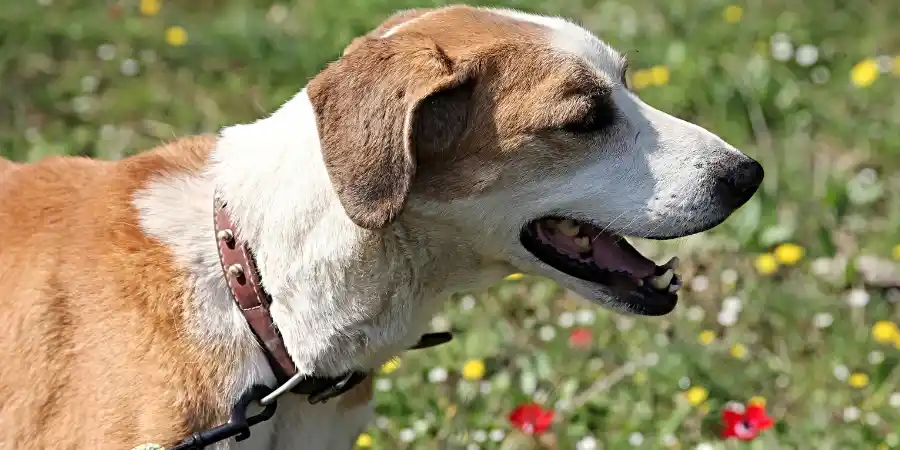
If your dog is choking, they will show severe panic, struggle to breathe, paw at their mouth, drool heavily, or have blue-tinged gums. Remain calm, look inside the mouth to see if a visible object can be safely removed, and use abdominal thrusts or gravity if needed before rushing to a vet.
A choking dog will show immediate distress, including pawing at their mouth, gagging, coughing, excessive drooling, or rubbing their face on the ground. Other critical signs include blue/white gums, panic, and wheezing or inaudible breathing. If you see a foreign object, try to remove it, but avoid pushing it further down.
8 Signs Your Dog Is Choking Right Now
Check for these signs immediately. The more of these you see together, the more certain you can be that choking is happening.
| Sign | What It Looks Like | Severity |
|---|---|---|
| Pawing at the mouth or face | Dog rakes at muzzle or throat repeatedly | Early sign |
| Coughing or gagging violently | Forceful repeated coughing with no relief | Early to moderate |
| Visible distress and panic | Dog paces, cannot settle, looks frantic | Moderate |
| Difficulty inhaling | Dog can breathe out but struggles to breathe in | Moderate act now |
| Excessive drooling | Heavy gushing saliva, not a small dribble | Moderate |
| Neck extended forward | Dog stretches neck out, trying to open airway | Moderate to severe |
| Blue, white, or grey gums | Lift the upper lip gums have lost their pink colour | Severe emergency |
| Collapse or loss of consciousness | Dog falls, goes limp, stops responding | Critical act immediately |
A dog with blue or white gums is not getting enough oxygen. This is a critical emergency. Go to an emergency vet immediately do not attempt home first aid first unless the drive is more than 10 minutes away.
Partial Blockage vs Full Blockage
This distinction changes everything about how you respond.
| Partial Blockage | Full Blockage | |
|---|---|---|
| Breathing | Can breathe, but with difficulty or noise | Cannot breathe at all |
| Sound | Coughing, gagging, wheezing, high-pitched breathing | Silence no air moving |
| Gum colour | May still be pink | Rapidly turning blue or white |
| Behaviour | Distressed but responsive | Panicked, then collapsing |
| First action | Encourage coughing do not intervene yet | Immediate first aid then emergency vet |
| Time available | Minutes | Seconds |
A dog with a partial blockage may clear the object on their own through coughing. Stay close, stay calm, and watch. If coughing resolves the distress within 30–60 seconds, the object likely came loose. If the distress continues or worsens move to first aid. A dog with a full blockage has no time. Begin the steps below immediately and drive to an emergency vet at the same time.
The Tripod Position
Most choking guides describe the symptoms above. Almost none describe this specific posture and it is one of the most reliable visual indicators that a dog has an airway obstruction.
A choking dog in distress often stands with their front legs spread wide apart, neck stretched forward and down, elbows turned out. They look like they are trying to make their body as open as possible.
This is the tripod position the dog’s involuntary attempt to maximise the space in their chest to pull in more air.
If your dog is standing in this position alongside any of the signs in the table above they are having serious trouble breathing. This is not reverse sneezing, not kennel cough, not gagging from eating too fast. This is an airway emergency. Move to action.
Choking vs Reverse Sneezing vs Kennel Cough vs Gagging
This is the most common source of panic and the most important thing to get right before you act. Treating reverse sneezing like choking does nothing helpful. Treating choking like reverse sneezing can be fatal.
| Condition | Sound | Duration | Gum Colour | Dog’s Posture | Action |
|---|---|---|---|---|---|
| Choking | Gagging, silence, or high-pitched wheeze on inhale | Continuous, getting worse | Turning blue or white | Tripod stance, extreme panic | Emergency first aid + vet |
| Reverse sneezing | Loud snorting, honking, rapid inhale through nose | 10–30 seconds, then stops | Normal pink | Standing still, neck extended | None needed it passes |
| Kennel cough | Honking dry cough, like something is stuck | Comes in bouts, stops between | Normal pink | Normal stance, dog alert | Vet appointment not emergency |
| Post-meal gagging | Single gag or retch after eating fast | Once or twice, then done | Normal pink | Normal, settles quickly | Monitor if repeats, call vet |
Reverse sneezing is the most commonly confused condition. It sounds alarming rapid, loud, repeated snorting and gagging but the dog breathes normally between episodes and returns to normal completely within 30 seconds.
Gums stay pink. The dog is not in distress between the snorting bursts. Covering the nostrils briefly or massaging the throat gently often stops a reverse sneezing episode immediately. If covering the nostrils stops the sound and the dog relaxes it was reverse sneezing, not choking.
What to Do Right Now
Stay as calm as you can. A panicked owner makes a panicked dog more panicked. Breathe. Move quickly but deliberately.
1. Assess the blockage type. Is your dog coughing and struggling but still breathing? That is a partial blockage. Give them 30–60 seconds to attempt to cough the object out themselves. Coughing creates more airway pressure than anything you can do manually. Stay close and watch.
Is your dog silent, not breathing, or collapsing? That is a full blockage. Skip waiting. Go to Step 2 immediately.
2. Open the mouth and look. Hold your dog’s head firmly. Open the mouth by pressing gently on both sides of the upper jaw while tilting the head slightly upward. Pull the tongue forward gently. Look directly down the throat with good light.
If you can clearly see the object and it is near the front of the mouth use one finger to sweep it out from the side. Never push your finger straight down the throat. Never poke at something you cannot see. Pushing a partially lodged object further down is worse than leaving it.
If you cannot see the object or cannot reach it safely do not blindly dig. Move to Step 3.
3. Use gravity. Pick up a small dog and hold them upside down by the thighs head hanging toward the floor for 10–15 seconds. Gravity sometimes dislodges the object without any further intervention.
For a large dog, lift the rear legs while keeping the front legs on the ground. The head drops below the level of the chest. Hold for 5–10 seconds. Check the mouth again after.
4. Perform the Heimlich maneuver. See the size-specific instructions in the next section.
5. Drive to an emergency vet. Even if the object comes out and your dog appears normal go to the emergency vet. Choking causes internal damage that is not visible from the outside. This is not cautious advice it is necessary.
The Heimlich Maneuver for Dogs ,Adapted by Size
The technique changes significantly depending on your dog’s size. Using large-dog technique on a small dog causes injury.
For small dogs — under 10kg (22lbs)
Hold your dog with their back against your chest, their belly facing outward and their head up. Place one fist just below the ribcage. Cover your fist with your other hand. Give 5 firm, quick thrusts inward and upward toward the dog’s head. Check the mouth after every 5 thrusts. Repeat until the object dislodges or you reach the vet.
For medium dogs — 10–25kg (22–55lbs)
Stand or kneel behind your dog. Wrap both arms around their belly just in front of the hind legs. Make a fist with one hand, place it below the last rib, and cover it with your other hand. Give 5 quick, firm thrusts upward and inward. Check the mouth. Repeat.
For large dogs — over 25kg (55lbs)
Kneel behind your dog. They will likely be too heavy to hold against your chest. Wrap your arms around the belly. Position your fist below the last rib. Give 5 firm upward-inward thrusts. Alternatively, lay the dog on their side and give 5 sharp strikes with the flat of your hand to the area just behind the last rib. Check the mouth after each set of 5.
For all sizes:
After every 5 thrusts, open the mouth and check for the object. If you see it near the front sweep it out with a sideways finger motion. Never stop to give more than two rounds of 5 thrusts before reassessing and driving to the vet if no improvement.
If Your Dog Loses Consciousness
If your dog collapses and goes limp the emergency has escalated.
Open the mouth immediately and look for the object one more time. If you see it, remove it. If not, attempt rescue breathing: for small dogs, cover both the nose and mouth with your mouth and breathe gently until you see the chest rise.
For large dogs, cover only the nose, hold the mouth closed, and breathe gently.
Give 2 rescue breaths, then 5 abdominal thrusts, then check the mouth. Repeat this cycle as you travel to the emergency vet. Do not stop to call first drive immediately and have someone call ahead on the way.
A dog that has gone 3–5 minutes without oxygen risks permanent brain damage. Time is the only factor you can control from this point. Drive.
Is It Choking or Anaphylaxis?
There is a form of airway emergency that looks exactly like object-choking from the outside but has no object at all. This is anaphylaxis a severe allergic reaction that causes internal swelling of the throat and airways.
A dog in anaphylaxis chokes from the inside. The signs are identical to object-choking: pawing at the face, swelling around the muzzle and throat, difficulty breathing, blue gums, and collapse. The difference is the context.
If your dog just ate a new food, received a vaccination, was stung by an insect, or ingested something unknown in the minutes before the symptoms started anaphylaxis is the more likely cause than an object blockage.
Check the gums and the throat for swelling. A swollen, puffy throat with no visible object points to anaphylaxis.
Anaphylaxis does not respond to the Heimlich maneuver. It requires epinephrine a drug only available at the vet. Go directly to an emergency vet without attempting manual removal.
If your dog has known allergies, read our guide on hives in dogs for how allergic reactions escalate and keep your vet’s emergency number saved in your phone.
Brachycephalic Breeds
Flat-faced breeds have compressed airways by anatomy. Their soft palate is larger relative to their throat space, their nostrils are narrower, and their trachea is often narrower than breeds of the same body weight. Any partial obstruction that a Labrador could breathe around becomes a full obstruction in a French Bulldog or Pug.
High-risk breeds include: French Bulldog, English Bulldog, Pug, Shih Tzu, Boston Terrier, Pekinese, and Cavalier King Charles Spaniel.
Owners of these breeds need to be especially careful about: chew size, toy size, eating speed, and exercise in hot weather — which compounds breathing difficulty.
If you own one of these breeds, use our dog care plan page to build a health record that includes their specific airway risk factors for every vet visit.
After the Object Is Removed , What to Watch For
Most guides end here: “take your dog to the vet after.” None explain why or what happens if you do not.
When a dog chokes, the object moving through the airway causes physical trauma to the throat lining. That trauma can cause swelling that develops over the following hours not immediately.
A dog that appears fine after you remove the object can develop breathing difficulty 2–4 hours later as inflammation builds.
The second risk is aspiration pneumonia. Any food, fluid, or small particle that passed into the lungs during the choking event creates the conditions for bacterial pneumonia.
Aspiration pneumonia typically develops 12–24 hours after the choking event and presents as: coughing that develops hours after the event, rapid breathing, fever, and lethargy.
Watch your dog closely for 24–48 hours after any choking episode. If they develop any of the following rapid or laboured breathing, fever, coughing that was not present immediately after the incident, reluctance to eat or drink, or signs of dog weakness return to the vet immediately.
Check our guide on dog fever symptoms for how to take a temperature reading at home during your monitoring period.
Common Choking Hazards by Category
| Category | Specific Hazards | Risk Level |
|---|---|---|
| Toys | Any ball that fits past the front teeth, squeaker toys that come apart, rope toys in chunks | Very high |
| Food | Raw bones that splinter, rawhide, large treats given whole, corn cobs, whole grapes | Very high |
| Household items | Children’s toys, bottle caps, coins, hair ties, rubber bands, socks | High |
| Outdoor items | Sticks, stones, acorns, seed pods, bark chunks | High |
| Chews | Pig ears, bully sticks (end pieces), antler chips | Moderate to high |
The sizing rule for everything: if the object can fit completely past your dog’s front teeth, it is a choking risk. Buy toys and chews rated for a size larger than your dog. Regularly inspect all toys for broken or detached pieces and remove them immediately.
Use our dog illness guide to add choking hazard awareness to your regular home safety routine.
Use our tools :
- https://mydogwell.com/pet-age-calculator/
- https://mydogwell.com/get-your-dog-care-plan/
- https://mydogwell.com/pet-water-intake-calculator/
- https://mydogwell.com/emergency-drug-calculator-for-dogs-cats/
At mydogwell.com, we keep things simple. No complicated terms, no confusing information just practical advice to help you understand your dog better and keep them healthy.
FAQs
How can I tell if my dog is choking or just coughing?
A coughing dog breathes normally between coughs the chest rises and falls, air moves in and out. A choking dog struggles to inhale. They may cough forcefully but cannot draw a proper breath in.
Watch the chest: if the inhale looks laboured, strained, or accompanied by a high-pitched sound that is an airway obstruction, not a cough. Check the gum colour. Pink gums during a coughing episode mean the dog is oxygenating. Blue or white gums during any breathing difficulty mean choking or another airway emergency.
What does reverse sneezing look like compared to choking?
Reverse sneezing sounds alarming but is not dangerous. The dog makes rapid, loud snorting sounds while inhaling through the nose. The episode lasts 10–30 seconds and then stops completely, with the dog returning to normal immediately. Gum colour stays pink throughout.
In choking, the dog cannot get air in effectively, gums may change colour, distress continues and worsens rather than resolving, and the dog assumes the tripod stance.
If covering your dog’s nostrils briefly stops the episode within a few seconds it was reverse sneezing.
Can a dog choke to death?
Yes. A dog with a full airway blockage loses consciousness within minutes and suffers brain damage after 3–5 minutes without oxygen. This is why immediate action and getting to an emergency vet quickly are both essential.
A partial blockage is less immediately life-threatening but still requires intervention if the dog cannot clear the object on their own within a minute.
Should I do the Heimlich maneuver on my dog?
Only when the dog cannot breathe and you cannot see or safely reach the object. The Heimlich maneuver is the correct emergency response to a full airway blockage when the object cannot be removed by visual sweep or gravity.
Use the size-appropriate technique from this guide. Always go to an emergency vet after performing the Heimlich even if the object comes out and the dog seems fine.
My dog stopped choking on its own do I still need to go to the vet?
Yes. Any choking episode even one that resolves on its own needs a same-day vet check. Internal trauma to the throat lining and aspiration pneumonia both develop after the choking event has resolved.
A dog that seems fine immediately after choking can develop serious complications within 12–24 hours. Tell your vet exactly what happened, how long the episode lasted, and what your dog swallowed if you know.
What are the most dangerous choking hazards for dogs?
Balls that fit past the front teeth are the highest single risk item in most households. Rawhide is dangerous because it softens and swells in the throat. Splintering bones cause both choking and internal lacerations.
Children’s toys, bottle caps, and coins are swallowed whole by dogs investigating them. The sizing rule applies to everything: if it fits completely in the mouth, it is a choking risk for that dog.
MEDICAL DISCLAIMER: This article is for
informational purposes only. MyDogWell.com is not
operated by licensed veterinarians. Always consult
with a licensed veterinarian before making any
health decisions for your dog.
[Read Full Medical Disclaimer]: https://mydogwell.com/medical-disclaimer/